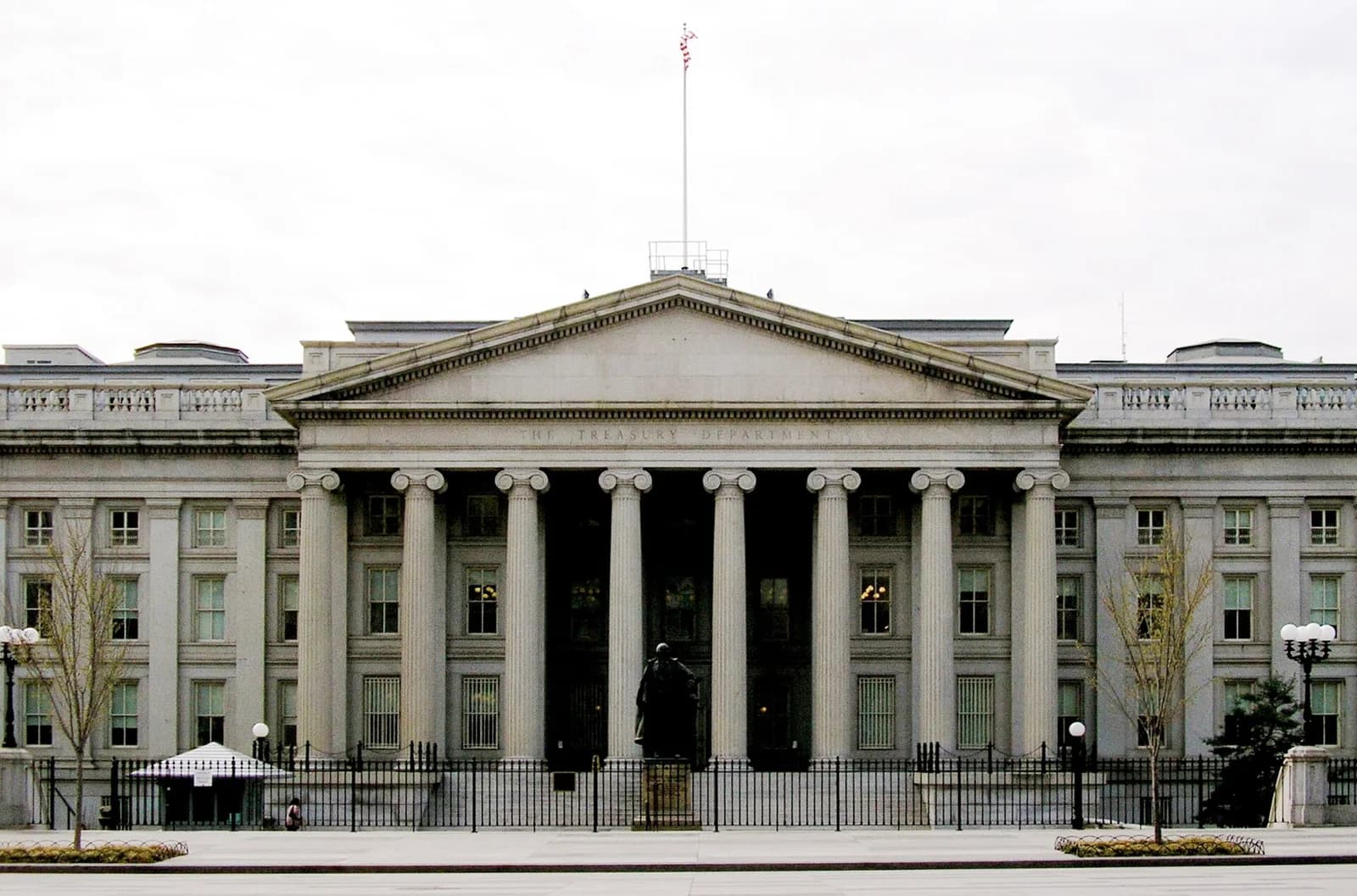
The Department of Homeland Security on October 8, 2026, published a proposed rule that would require schools certified by the Student and Exchange Visitor Program to pay a $70,000 fee for each initial Optional Practical Training recommendation for an F-1 student and a $30,000 fee for each subsequent recommendation, including STEM OPT extensions. The fees, published in the Federal Register as 91 FR 64566, would be paid by institutions before a designated school official can enter the OPT recommendation in SEVIS, and U.S. Citizenship and Immigration Services would deny employment authorization if the fee is unpaid. Public comments are due November 9, 2026. [1]
How the proposed fee would work
Under the proposed rule, the $70,000 fee applies to any initial OPT recommendation, whether for pre-completion, post-completion, or STEM OPT. The $30,000 fee applies to each subsequent OPT recommendation for the same student. The fee is per student, not per employer. The rule would take effect 60 days after publication of the final rule, and only OPT recommendations dated on or after that effective date would trigger the fee. Students currently on OPT or already recommended before the effective date would not be charged, but any subsequent OPT request after the effective date would require payment. [1]
Collected fees would be deposited in the U.S. Treasury as miscellaneous receipts under 31 U.S.C. 3302. ICE would not retain or use the funds, because INA 214(a) does not authorize ICE to retain them. DHS noted in the proposed rule that Congress could later appropriate the funds for immigration system integrity purposes. [1]
DHS acknowledged that schools may pass the fee cost to F-1 students, all students, or employers, so long as the school complies with other applicable laws including foreign gift reporting under 20 U.S.C. 1011f. DHS stated that passing costs to students or employers would further discourage misuse of OPT. [1]
DHS rationale and alignment with H-1B fees
DHS stated in the proposed rule and in a separate agency news release that the fee amounts are designed to align closely with H-1B visa program fees, in order to reduce students and employers using OPT to circumvent the H-1B visa program fees. DHS said the fee is intended to incentivize institutions to exercise greater oversight and selectivity when recommending students for OPT. [1][2]
The H-1B program charges employers a $1,500 American Competitiveness and Workforce Improvement Act training fee (reduced to $750 for employers with 25 or fewer full-time employees), a $500 anti-fraud fee, and in some cases an additional $4,000 fee under Public Law 114-113 for covered employers with 50 or more employees where more than 50 percent of those employees hold H-1B or L-1 status. Those amounts are far lower than the proposed $70,000 OPT fee, according to the Federal Register notice. DHS considered but rejected an exemption for small educational institutions, finding that 56 percent of SEVP-certified institutions are small entities and that exempting them would leave significant fraud vulnerabilities unaddressed. according to the Federal Register notice. [1][7]
Higher education opposition
NAFSA: Association of International Educators issued a statement on October 7, 2026, opposing the proposed rule. Executive Director Fanta Aw said the new fee structure creates deep uncertainty for international students and that driving away international talent will hurt American innovation, economic growth, workforce development, and global leadership. NAFSA and other higher education associations are mobilizing opposition. [3]
What research says about OPT and the U.S. labor market
A 2019 study by Madeline Zavodny, published through the National Foundation for American Policy, used ICE Freedom of Information Act data covering 2008-2016. The study found no evidence that foreign students participating in the OPT program reduce job opportunities for U.S. workers. The relative number of foreign students approved for OPT was negatively correlated with unemployment rates among U.S. STEM workers at the national, state, and metro-area levels, suggesting employers turn to OPT when U.S. workers are scarcer. The study noted that OPT participants comprised less than 1 percent of all workers with a STEM bachelor's degree and about 2.5 percent of workers in STEM occupations with at least a bachelor's degree in 2016. according to the study's comparison of ICE FOIA data against American Community Survey workforce figures. [4]
A 2020 peer-reviewed study by Murat Demirci in the Canadian Journal of Economics found mixed effects. Increases in the labor supply of master's-level international STEM students via temporary work permits reduce employment of recently graduated native-born master's degree holders, but increase earnings of experienced native-born master's degree holders in the same field. The study supports a substitution effect among recent graduates but complementarity among experienced workers, according to the published abstract. [5]
A 2019 study by the same author in Economic Inquiry found that the STEM OPT extension increased eligible STEM students' likelihood of initially staying in the U.S. after graduation. The published abstract confirms the direction of this effect but does not include the specific percentage figures (7.1 percent at the master's level, 5.2 percent at the bachelor's level, and 2.4 percent at the doctorate level) cited in the article; those figures appear in the full text of the study and could not be independently verified in this session. This suggests the program is important for retaining foreign talent and that longer OPT terms reduce uncertainty for firms and students before costly H-1B sponsorship. [6]
Cost estimates for institutions
DHS estimated that annualized costs of the proposed rule could range from $32 million to $8.2 billion, with a primary estimate of $4.1 billion discounted at 3 percent. according to the Federal Register notice. The 10-year total cost estimate ranges from $275 million to $69.9 billion, with a primary estimate of $35.1 billion. DHS identified 2,478 SEVP-certified institutions that enrolled F-1 students participating in OPT with employment start dates in 2022-2024. [1]