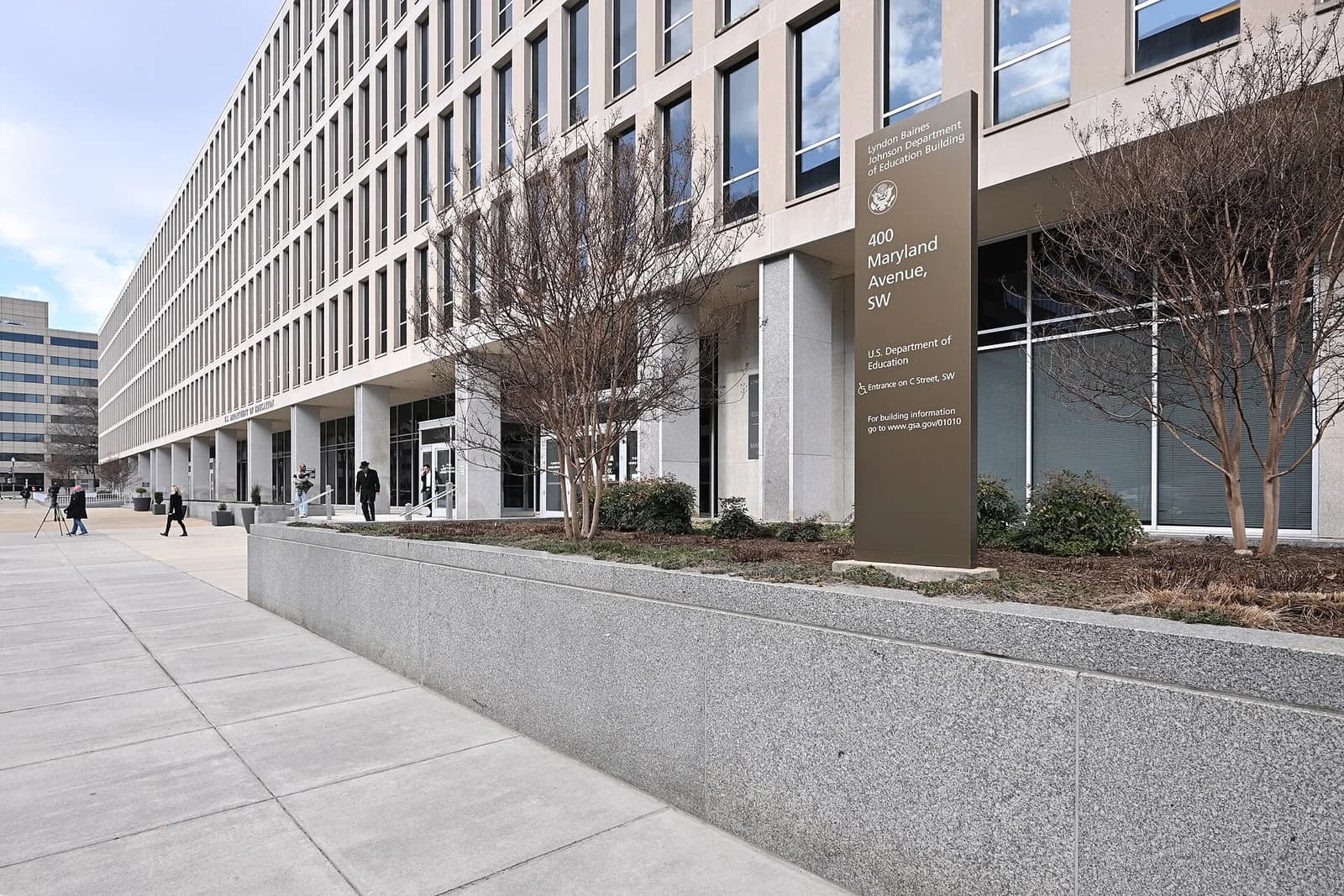
A federal judge in Massachusetts has vacated a U.S. Department of Education directive that severed roughly $600 million in teacher-preparation grants, ruling that the department acted arbitrarily and without legal authority. The September 17, 2026 decision from Judge Angel Kelley of the U.S. District Court for the District of Massachusetts grants summary judgment to eight states and strikes down the February 5, 2025 internal directive, titled "Eliminating Discrimination and Fraud in Department Grant Awards."
What the court found
The directive ordered the termination of grants under the Teacher Quality Partnership (TQP) and Supporting Effective Educator Development (SEED) programs that the department said promoted diversity, equity, and inclusion (DEI) content. Within fourteen days, the department terminated 104 of the 109 active grants, including 40 grants held by institutions in the plaintiff states of California, Massachusetts, New Jersey, Colorado, Illinois, Maryland, New York, and Wisconsin. According to the court's order, the review was conducted by just seven personnel over one week and sought "objectionable material associated with DEI, such as cultural responsiveness, systemic privilege, racial justice, social justice, and anti-racism" without individualized analysis of any particular grant.
Judge Kelley ruled the directive arbitrary and capricious on four separate grounds and contrary to three independent sources of law: the governing TQP and SEED statutes, which require programs to recruit diverse educators and serve underserved populations; the General Education Provisions Act's notice-and-comment requirement; and the Uniform Guidance's limits on post-award terminations at 2 C.F.R. Section 200.340. Because the Administrative Procedure Act allows vacatur that applies nationwide, the directive is invalid in its entirety, not only in the plaintiff states.
Procedural history
The decision is the latest in a series of court actions over the grant cuts. On February 17, 2025, the department issued a press release announcing it had cut over $600 million in grants tied to topics including Critical Race Theory, DEI, social justice activism, anti-racism, and instruction on white privilege and white supremacy. A separate lawsuit, filed by the American Association of Colleges for Teacher Education in the U.S. District Court for the District of Maryland, challenged the same terminations and resulted in a preliminary injunction that found the department's lack of individualized analysis and use of boilerplate termination letters legally insufficient.
In the Massachusetts case, a temporary restraining order issued on March 10, 2025 required the department to restore the pre-termination status quo for the plaintiff states. The Supreme Court granted a stay of that order on April 4, 2025 by a 5-4 vote, pending appeal. The First Circuit had denied the department's motion to stay the district court's order on March 21, 2025. Judge Allison D. Burroughs of the U.S. District Court for the District of Massachusetts also handled a related case brought by Harvard University, which challenged a separate set of department "Freeze Orders" and termination letters. On September 3, 2025, Burroughs declared those termination letters violative of Title VI and the freeze orders arbitrary and capricious and violative of the First Amendment, permanently barring terminations made on or after April 14, 2025.
Unresolved questions
The ruling vacates the legal basis for the bulk terminations, but the practical effect on already-terminated grants remains unclear. The department informed the court that it had not relied on the February 2025 directive in issuing any termination or non-continuation decisions for TQP and SEED grants since June 5, 2025. The opinion leaves open whether funding that stopped will resume and under what terms the department might run any future TQP or SEED grant competitions. The court denied a permanent injunction as duplicative of the vacatur, noting that the plaintiff states can challenge any replacement directive through preclusion principles.