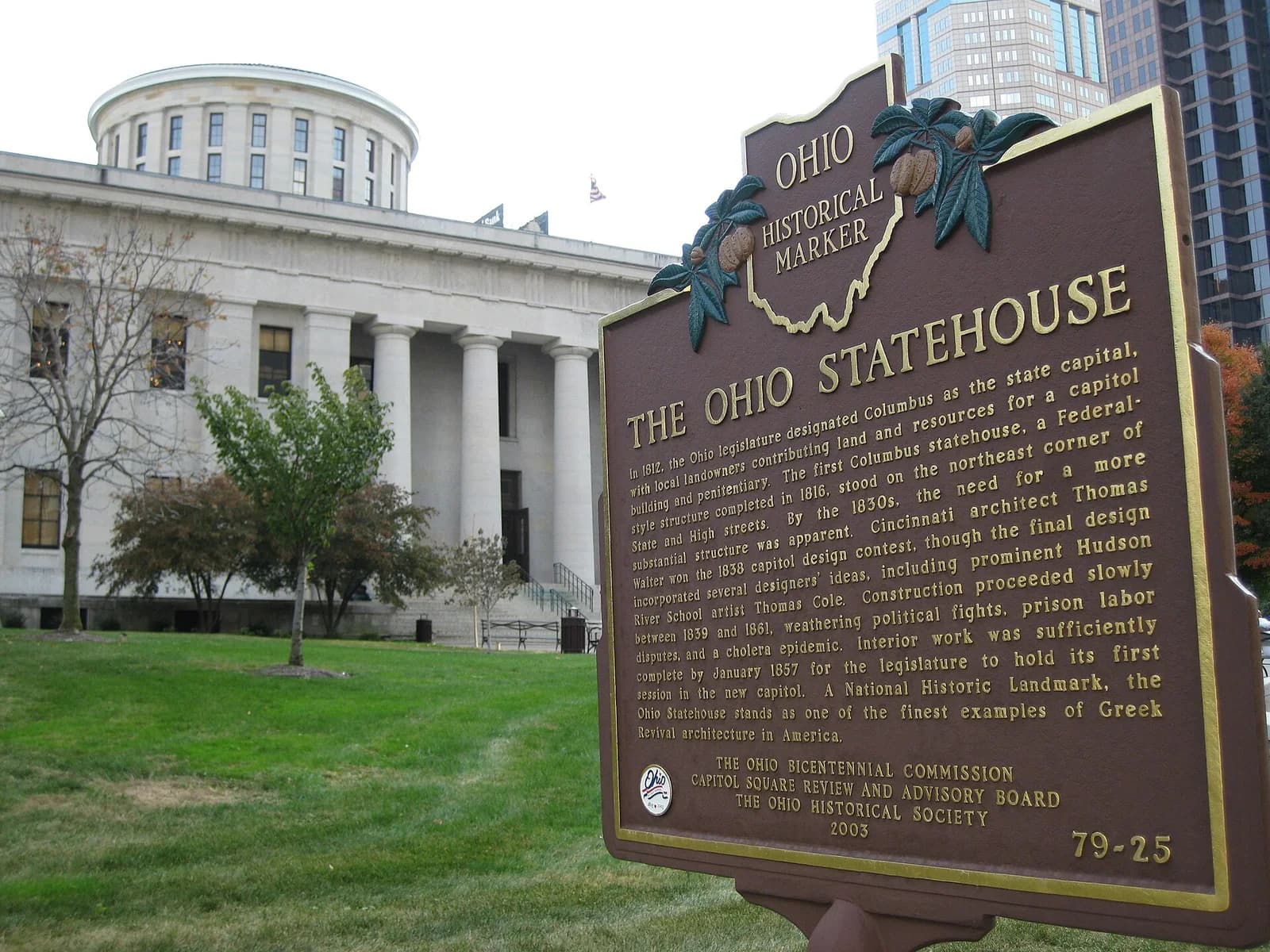
Ohio Governor Mike DeWine signed House Bill 455 on July 10, 2026, enacting the most extensive education code cleanup in years. The law, effective October 9, 2026, revises how schools are rated on state report cards, removes more than a dozen reporting mandates, and widens access to an early childhood grant program. The bill passed the House and Senate on June 10, 2026, and its sponsors, Reps. Gayle Manning and Adam Bird, have described it as a way to cut administrative burden so teachers can spend more time on instruction.
The most consequential changes concern the state report card. Under the new law, the Graduation component now counts students with disabilities who met diploma requirements but chose not to receive a diploma before age 22 as graduates. This restores a measure that had been eliminated by an earlier law, and it is narrow in scope. The Ohio Legislative Service Commission's fiscal note estimates that 1,651 such students were enrolled in the 2024-2025 school year, roughly 0.1 percent of statewide enrollment.
The bill also adds a second adjustment to the readiness component. Students can now demonstrate college, career, and military readiness through a remediation-free score on a nationally standardized assessment in both English language arts and math, or through end-of-course exams. Additionally, a score of 3 or higher on an AP exam or 4 or higher on an IB exam counts as three college credits toward the 12-credit threshold, a change that broadens how schools can earn points on the report card.
What the law removes
Beyond the report card shifts, HB 455 eliminates more than a dozen reporting requirements that districts and the Ohio Department of Education and Workforce (DEW) previously had to file. These include annual reports on student diabetes cases, physical education benchmarks, district compliance with state mandates, and interim money investments by treasurers. The bill also ends DEW's ranking of public schools by student performance growth, a list that used the value-added progress dimension.
Several of these removals target provisions that had already become obsolete. The law strikes the framework for the Ohio Graduation Tests, the old report card formulas from the 2012-2013 through 2020-2021 school years, and the 'safe harbor' provisions from 2014-2017. It also eliminates the definition of a 'challenged school district' and removes a prohibition on school district borrowing from commercial lenders that dated to 1998. The bill drops references to college-preparatory boarding schools, a school type that no longer exists in Ohio.
The law also revises the Educator Standards Board. The Department of Education and Workforce is no longer required to employ a full-time physical education coordinator, a position that had been vacant with duties assigned to other staff. The change removes physical education data from the report card and eliminates the requirement that schools report on physical activity pilot program participation.
Expanding preschool access
On the grant side, the bill expands the Early Childhood Education Grant Program in two ways. First, it requires early learning programs, in consultation with county departments of job and family services, to determine a family's eligibility for the grant. Second, it allows families to choose the ECE Grant instead of other state childcare funding. The bill also adds new eligibility grounds for families above 200 percent of the federal poverty level, including a child who has exited Ohio's early intervention services program.
A narrow fix with a wider effect
The bill's fiscal note projects an additional $67,000 in state spending for the first year, tied to a new requirement that DEW create an online testing system for remote community schools. The provision allows remote state testing with a video proctor at a ratio of one proctor per 11 students. DEW must publish an annual report checking those tests for signs of cheating or unusual results.
The bill also makes a change to the state board of education. It increases the number of governor-appointed members from five to seven and sets a January 1, 2027 deadline to fill any vacant seat. Additionally, the law adds strangulation and grooming to the list of offenses that automatically trigger an educator's license revocation, joining domestic violence.
Notably absent from the final bill are any changes to Ohio's Parents' Bill of Rights. A proposed exception that would have allowed school staff to withhold parental notification of a student's gender identity change if there was a reasonable belief of imminent harm was removed in committee. The final version leaves the existing law intact.
For Ohio districts, the practical effect of HB 455 is a reduction in paperwork, with the state cutting roughly a dozen reporting requirements from the code. The Law's sponsors have said this will free up time for instruction, and the report card changes are designed to give a fairer picture of schools that serve students with disabilities. Whether those adjustments will change how districts are rated in practice remains to be seen, but the bill targets specific measures that had become outdated or redundant rather than overhauling the broader accountability system.