Pinellas County Schools Superintendent Kevin Hendrick presented a plan to the school board on September 10, 2026, to close six elementary schools and one 6-12 center, convert several other campuses to magnet, fundamental, or K-8 programs, and eliminate nearly 5,000 unused student seats. The proposal is part of the district's 'Planning for Progress' initiative, which began earlier this year.
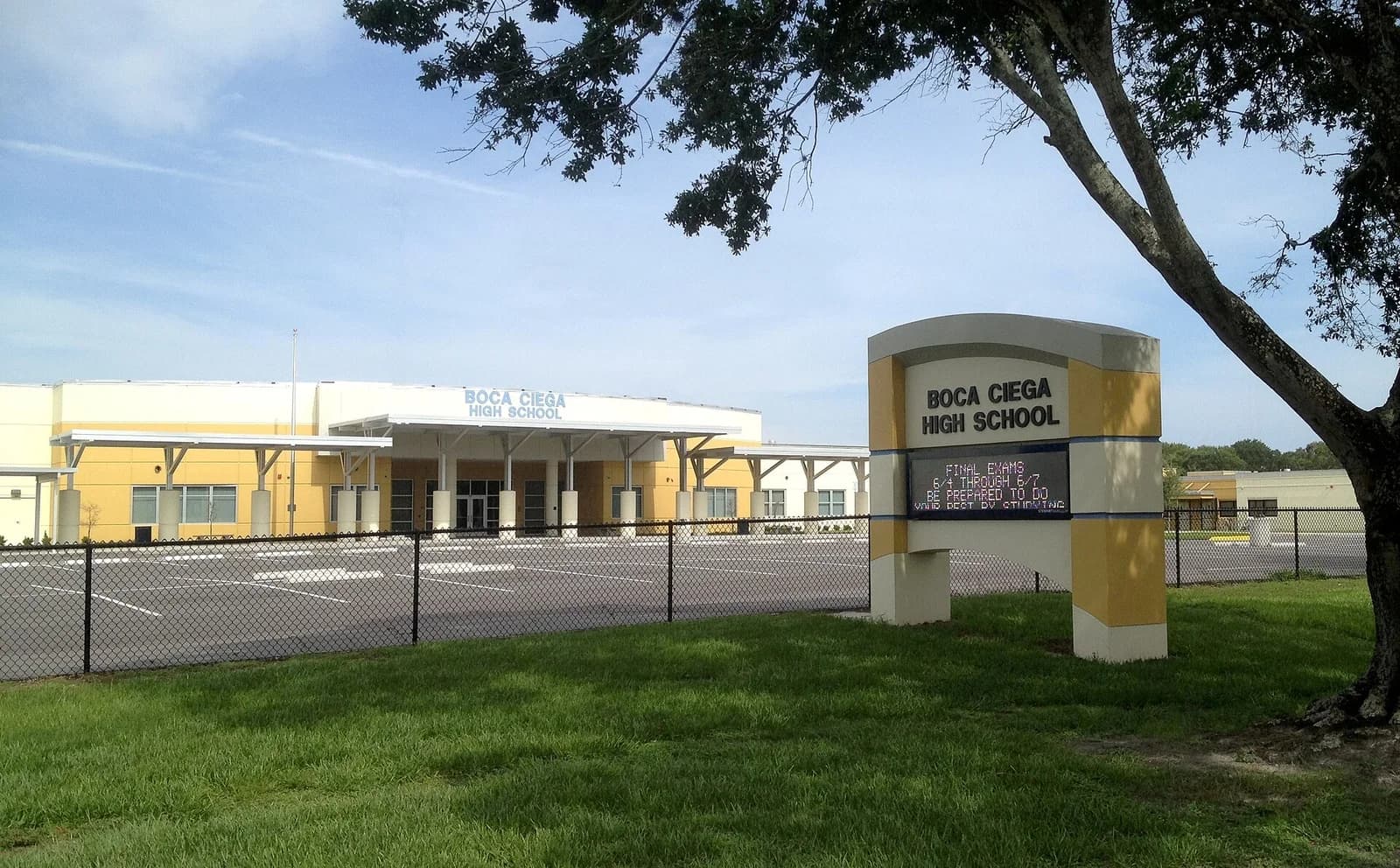
The seven schools targeted for closure or transition are Tarpon Springs Fundamental Elementary, Kings Highway Elementary, Blanton Elementary, Azalea Elementary, Bear Creek Elementary, Sexton Elementary, and Lealman Innovation (grades 6-12). Some campuses would be repurposed: Azalea Elementary is slated to become a K-8 with an expanded attendance zone, and Tarpon Springs Fundamental Elementary and Middle would close but be replaced by a new fundamental K-8. Additional conversions include creating a technical high school at Boca Ciega High School, relocating and renaming Azalea Middle School to a building at Boca Ciega High School, expanding East Lake Middle School's engineering academy seats, and launching a fundamental K-5 at the Pinellas Park Elementary campus, which would replace the current program there.
The district estimates the plan could save approximately $25 million per year. Hendrick told the board that savings would go into the operating fund for teacher raises, staff raises, and program improvements. No school-based staff members will lose their jobs; all employees will be offered placements within the district, according to district materials.
Enrollment decline and demographic trends
Chief Operations Officer Jennifer Dull told the board that Pinellas County birth rates fell from roughly 10,000 in 1990 to 7,010 in 2024. The University of Florida Bureau of Economic and Business Research projects the county's school-age population (ages 5 to 17) to decrease or plateau through 2050, according to a report from WUSF. About a third of the district's campuses sit at less than 60 percent capacity.
This is the second round of recommendations under the 'Planning for Progress' process. In January 2026, the board received recommendations to close Cross Bayou Elementary and Disston Academy at the end of the 2025-26 school year, expand Oldsmar Elementary into a K-8, combine Bay Point Elementary and Middle into a K-8, and expand employee child care to McMullen-Booth Elementary. According to the Suncoast News, those January recommendations were projected to eliminate 1,781 student seats, reduce approximately $7.7 million in recurring personnel costs, and cut about $7 million in planned capital expenses. About 600 stakeholders participated in community input sessions for that round.
The current timeline calls for public comment at board meetings on September 22 and October 13, 2026, a school board workshop on October 6, and a final board vote on October 13. School-based community meetings for affected campuses were held between September 14 and October 6, according to district FAQs.
How other Florida districts have handled school closures
Pinellas County is not alone in facing a structural mismatch between declining enrollment and surplus school capacity. Duval County Public Schools in Jacksonville has been undergoing its own multi-year consolidation driven by enrollment decline. The district lost 30,000 students over 10 years to charter and private schools, leaving 30,000 unfilled seats. A consultant recommended closing nearly 30 schools. In November 2024, the Duval board approved closing six elementary schools, with three closed immediately and three delayed. In December 2025, the board approved two more consolidations. Superintendent Christopher Bernier stated that each school needs at least 700 students to break even, but only 20 percent of Duval's 99 elementary schools meet that threshold, according to district documents.
Duval's school board later approved four additional consolidations for the 2026-27 school year: Don Brewer into Merrill Road, G.W. Carver into Rufus E. Payne, Hyde Grove into Hyde Park, and Hidden Oaks into Cedar Hills. Two other consolidations were delayed: Long Branch Elementary into R.L. Brown (2027-28) and Anchor Academy into Mayport (2028-29), to allow more community input and exploration of grants, according to district materials.
Equity concerns also emerged in Duval County. The Jacksonville NAACP raised concerns that four of the six schools initially selected for closure were more than 90 percent non-white, and that closures could exacerbate educational inequalities. Some schools with larger white student populations that organized parent opposition were removed from the closure list, raising questions about whether advocacy rather than data drove final decisions, according to Jacksonville Today.
A Florida state representative, Kimberly Daniels of District 14, publicly questioned Duval County's financial justification for closures, noting that reserve levels and fund balances did not match the district's reported crisis narrative. The district's reported deficit shifted from $1.4 billion to over $100 million over time, and the superintendent's language evolved from warning of a $100 million debt to describing a need for 'truly balancing' the budget, according to News4JAX.
What the research evidence shows about student retention after closures
Duval County Public Schools' own operational data show that student retention after school consolidations averages in the mid-80 percent range, meaning roughly 15 percent of students from closed schools leave the district entirely. For a 300-student school, that translates to about $400,000 in lost state funding per year, partially offsetting the $500,000 to $1.5 million in fixed-cost savings per closed school. This finding is district-reported operational data, not an independent peer-reviewed study, and reflects one Florida district's experience, as reported by Jacksonville Today.
Duval County also reported that 89 percent of all elementary students returned to a district school the following year after consolidation, and 92 percent remained in the district overall. In the specific case of R.V. Daniels consolidating into R.L. Brown, only 53 percent of students went to the consolidated school, though 92 percent stayed in the district. These figures are self-reported by the district and have not been independently audited, according to News4JAX.
The evidence base on student retention after school closures in Florida is limited. The data from Duval County represents one of the few available sources, but it is not based on a formal research study and has not been verified by an outside party. This means that Pinellas County's projected $25 million in annual savings carries a risk that a share of displaced students may leave the district, reducing the per-pupil state funding that supports the operating budget.