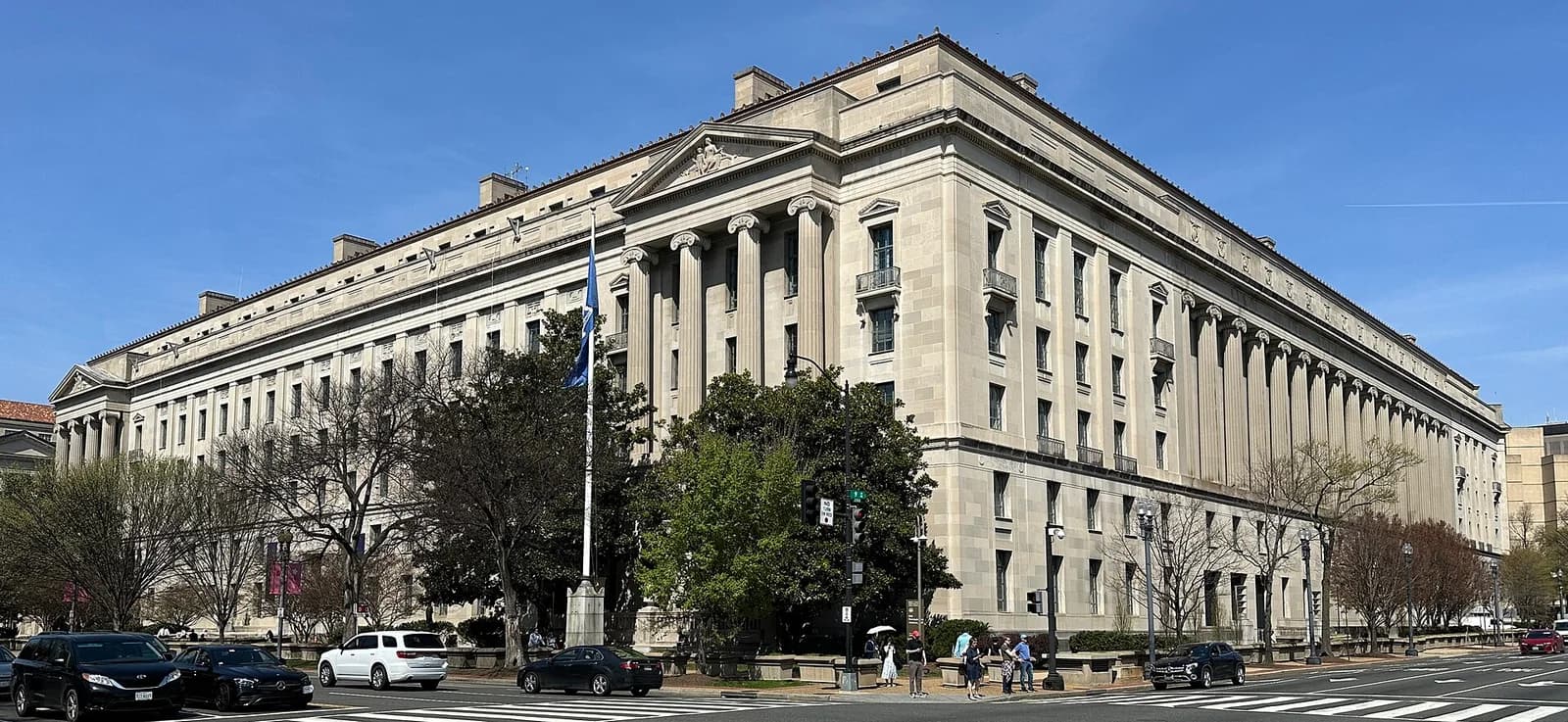
Between June 2025 and September 2026, the U.S. Department of Justice filed lawsuits against 24 states and Washington, D.C., arguing that state laws offering in-state tuition to undocumented students violate federal immigration law. Seven states have since ended or lost those discounted rates through court orders or legislative action. Separately, at least four states moved to restrict undocumented students from career-technical education and dual enrollment programs, though Virginia later reversed its policy.
A coordinated legal campaign
The DOJ's litigation relies on 8 U.S.C. section 1623(a), which bars states from granting higher education benefits based on residency to noncitizens who are not lawfully present. Six of the seven reversals came through federal court orders or consent judgments, not legislation. Texas was first, on June 4, 2025, when a federal judge voided the 2001 Texas Dream Act after the state agreed to a consent judgment. The Texas Higher Education Commissioner reported that about 19,000 students had signed affidavits under the law.
Oklahoma's in-state tuition access ended by court order on August 29, 2025. Florida repealed its 2014 out-of-state fee waiver through legislation, SB 2-C, effective July 1, 2025, affecting about 6,500 students. Kentucky's 2015 regulation was rescinded by a consent judgment signed March 31, 2026, with an appeal pending. Nebraska's 20-year-old law was struck down on June 3, 2026. Illinois's in-state tuition law, along with the RISE Act and the Illinois DREAM Fund, were ruled unconstitutional on July 24, 2026; the state declined to appeal. Kansas ended in-state tuition on September 9, 2026, when a federal judge entered a consent judgment. The court denied motions by Governor Laura Kelly and a student group to intervene, and an appeal was filed September 18, 2026.
Precedent and contested legal reasoning
The Illinois ruling in July 2026 was among the first major federal court decisions to strike down a state tuition-equity law using the DOJ's preemption theory. The court applied an express preemption analysis, holding that benefits tied to high school attendance and graduation plus residence are still granted on the basis of residence. The Fifth Circuit's July 2026 decision in the Texas case established a key appellate precedent: residence is a but-for condition for eligibility even when combined with other criteria. The court rejected the argument that high school graduation components remove residency as the basis.
The legal landscape remains contested. Minnesota defeated the DOJ challenge on March 27, 2026, when a federal court dismissed the lawsuit, ruling that the state's tuition-equity policies did not violate federal law. The DOJ appealed to the Eighth Circuit. Legal experts said the outcome depends on how states structure eligibility criteria. As of late September 2026, 17 states plus D.C. face pending lawsuits.
Restrictions on career and technical education
Florida, Virginia, Georgia, and Iowa separately moved to limit undocumented students' access to career-technical education and dual enrollment programs. Florida's Board of Education voted in September 2026 to ban undocumented students from district-run postsecondary CTE and dual enrollment programs, effective Spring 2027. The Board of Governors also moved to bar undocumented students from the 12 state universities beginning in the 2027-2028 academic year. Florida had about 512,000 postsecondary CTE students in 2025-2026.
In Virginia, then-Superintendent Emily Anne Gullickson sent an email requiring school districts to sign an attestation excluding non-qualified aliens from Perkins-funded CTE programs to keep $32.5 million in federal funding. More than 120 districts signed; Loudoun County refused and lost $150,000 in Perkins funding. New state education leadership later reversed the policy, with chief of staff Holly Coy saying the attestation was no longer a necessary requirement. Georgia's HB 18, introduced in January 2025, would require dual enrollment students to be legal residents. The Georgia Student Finance Commission is implementing restrictions; one Atlanta-area high school noted that undocumented students may still participate but must self-pay. Iowa maintained its restriction.
What the research says
Research on the impact of these policies is limited but emerging. Julie Sugarman, associate director for K-12 research at the Migration Policy Institute, said that while undocumented students have a right to public K-12 education under Plyler v. Doe, seeing postsecondary doors close may send them a discouraging message about their prospects. A school counselor in Gainesville, Florida, told The Independent Florida Alligator that the Florida restrictions would likely decrease participation in adult education and dual enrollment programs because families fear exposing immigration status. The counselor expressed hope that K-12 education remains protected from similar requirements to inquire about legal status.
Uncertain legal landscape ahead
The MigrantUSA litigation tracker, which monitors these cases, describes the status as mixed. In-state tuition laws were struck or rescinded in seven states but defended successfully in Minnesota. Cases remain pending in California, Virginia, New Jersey, Massachusetts, Rhode Island, Maryland, Colorado, New York, Connecticut, Vermont, New Mexico, Arizona, Oregon, Washington, Hawaii, Arkansas, and Utah, plus Washington, D.C. The tracker notes that a case's status can change with a single ruling and outcomes can turn on facts specific to each jurisdiction.