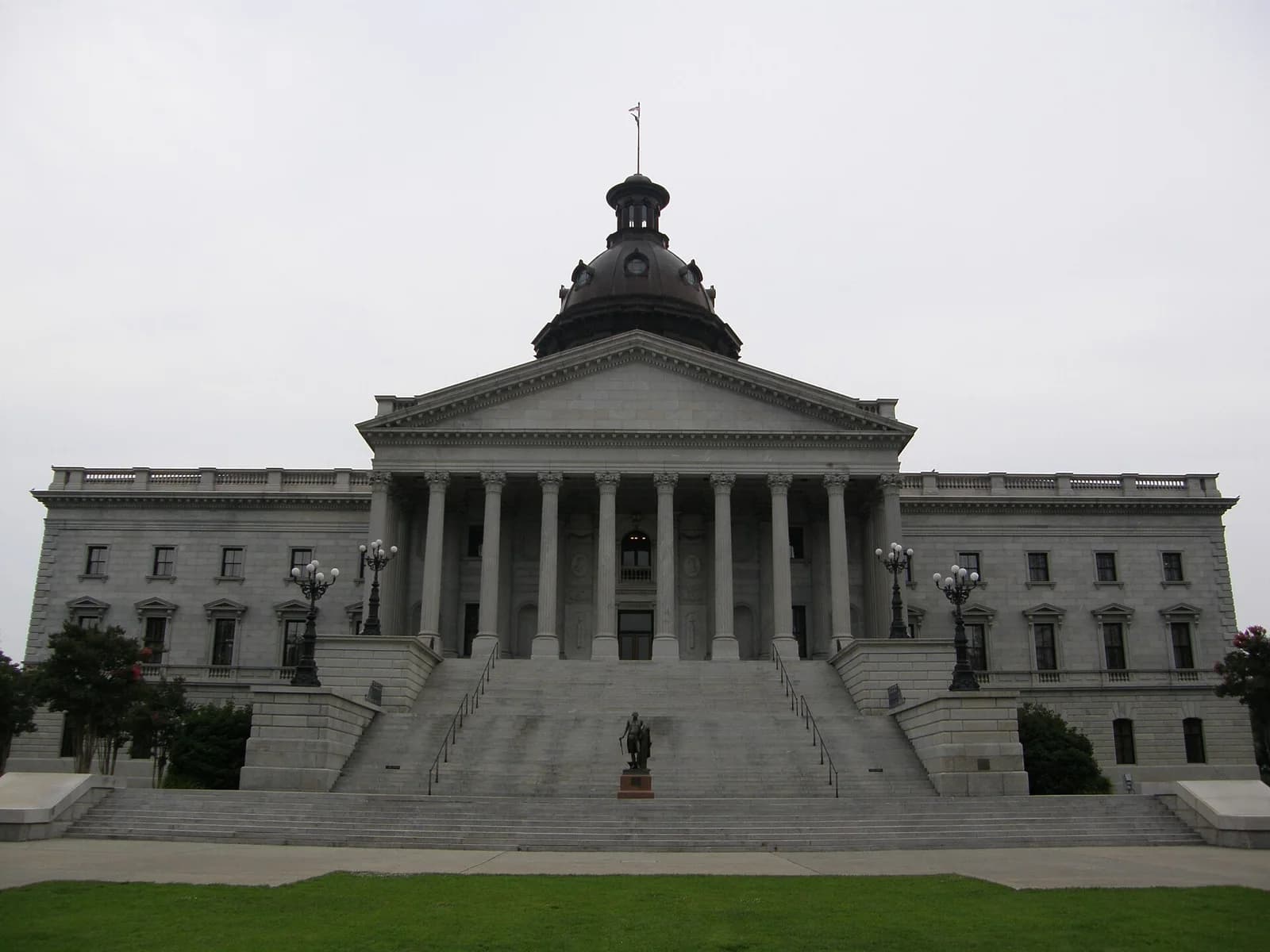
South Carolina has taken financial control of the Marlboro County School District, the latest and most severe step in a state escalation framework that began with audit findings in 2022. The State Board of Education approved the financial operations takeover at a special meeting on July 18, 2025, giving the state authority over all district financial transactions, contracts, and hiring decisions.
The state's action follows a Declaration of Fiscal Emergency issued February 18, 2025, after years of escalating scrutiny. The South Carolina Department of Education cited the district's failure to meet fiscal responsibilities, a delayed budget, and alleged procurement irregularities referred to the State Inspector General. The Inspector General investigation was still pending at the time of the approval.
Escalation under state law
The legal basis is S.C. Code § 59-20-90, which creates three escalating levels of state oversight: fiscal watch, fiscal caution, and fiscal emergency. A district can be declared in fiscal emergency if it has spent three of the previous five years under the lower levels, or if it risks defaulting on debt. Once in fiscal emergency, the state superintendent may recommend a financial operations takeover if the district has not made reasonable recovery plans.
Marlboro County first drew state concern in 2022 after its annual audit found significant deficiencies. That concern escalated over subsequent years, reaching fiscal emergency in February 2025 after the district submitted its audit late. The district did not appeal the declaration.
Budget shortfall and enrollment decline
The district's own budget added urgency. The Marlboro County Board of Trustees adopted a budget July 9, 2025, after the June 30 statutory deadline, relying heavily on exhausting the district's fund balance to cover a shortfall of about $6.9 million. The budget included school closures and consolidations, which the state halted. SCDE Superintendent Weaver called the consolidation plan untenable given the short time before the scheduled July 28 school start.
The financial strain comes amid a divergence between enrollment and staffing. Average daily membership fell from 3,525.7 in 2021-22 to 3,183.1 in 2024-25, a decline of 9.72 percent. Over the same period, teacher headcount rose from 219.0 to 267.0, an increase of 21.92 percent, and other district staff grew from 297.7 to 406.7, a 36.61 percent increase. SCDE compared this to nearby Dillon District 4, where enrollment also declined but staffing remained relatively flat.
How the takeover works
Under the approved takeover, SCDE must approve all district financial transactions, contracts, and personnel decisions. The state deployed a finance and operations team to review expenditures and direct corrective measures. The local board retains its role but loses sole discretion; significant fiscal decisions must be made in consultation with SCDE.
This financial-only takeover is distinct from a full state-of-education emergency under § 59-18-1640, which would dissolve the locally elected board and give the state superintendent full management. SCDE has cited that law as a potential next step if the district does not improve. The financial takeover mechanism itself is not new: SCDE took financial control of Jasper County School District in December 2024. As of July 2025, SCDE also had total control of two other districts, including Allendale County.
What the research shows
SCDE's own guidance documents outline the fiscal practices framework, but it is an administrative framework, not a peer-reviewed evaluation. The agency's materials describe the escalation levels and the conditions for takeover, but they do not assess the outcomes of such interventions. Evidence on the effectiveness of state financial takeovers in improving district finances or student outcomes is not provided in the available record.
What is known is that Marlboro County's academic performance lags. Six of the county's eight schools received grades of below average or unsatisfactory on SCDE's 2024 school report cards; the other two were ranked average. The budget approved by the local board was reported as either $42 million or $45 million depending on the source, and it drew about $1.4 million from the district's general fund.
The district cannot be released from fiscal emergency in the same fiscal year the declaration was made, and SCDE may maintain financial operations until the district is released. The pending Inspector General investigation into procurement irregularities could determine the next steps, including whether the state escalates to a full governance takeover.