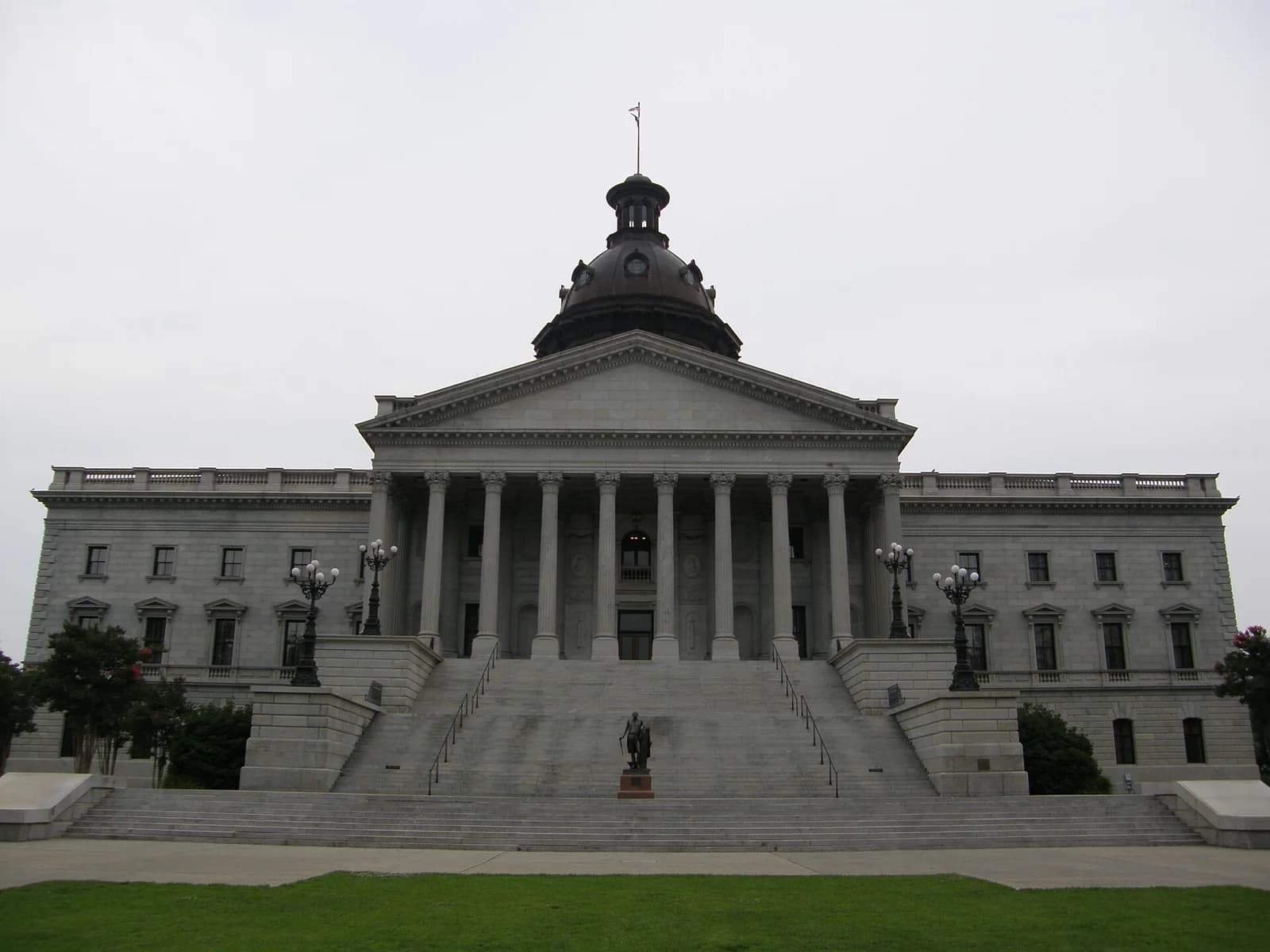
South Carolina House Bill 3866, introduced by Representative Pace on January 30, 2025, with Representative Frank added as co-sponsor on February 6, 2025, would require any adult registering a child for public school to present a current, unexpired government-issued photo identification. The bill lists five acceptable forms: a South Carolina driver's license, other photo identification issued by the state Department of Motor Vehicles, a United States passport, a military identification card with photograph, or a South Carolina voter registration card with a photograph, according to the bill text [1]. According to the National Immigration Forum, the five listed documents are available only to persons with lawful immigration status or U.S. citizenship, and the bill would therefore exclude undocumented immigrant children from public schools [3].
The ACLU of South Carolina warned that the requirement would pose an obstacle for families who lack photo identification, including some immigrant parents, older relatives caring for children, and families experiencing homelessness [2]. The ACLU cited American National Election Studies data showing that nearly 29 million American adults lacked a valid driver's license in 2020, and more than 7 million had no other form of unexpired government-issued photo identification [2]. The bill includes no alternative verification process or exemption for adults unable to obtain qualifying identification [1].
The bill was referred to the House Education and Public Works Committee and was discussed by the committee's K-12 Subcommittee on March 3, 2026 [2]. According to the ACLU of South Carolina, H. 3866 did not advance out of the House K-12 Subcommittee [8]. The South Carolina Legislature's bill history page shows no recorded action beyond the initial introduction and committee referral in January 2025 [1]. As of April 2026, it had not been introduced in the South Carolina Senate [3]. If approved by the legislature, the act would take effect upon the governor's signature [1].
Similar efforts in other states
Tennessee lawmakers considered a comparable bill, HB 0793, during the 2025-2026 session. The first version would have allowed schools to deny enrollment or charge tuition for students lacking documentation of immigration status. The bill was later amended to state that no student would be denied or excluded for lack of such documentation, but the measure still failed to pass [3]. The National Immigration Forum reported that legislators in at least nine states introduced proposals during the same period that would affect educational access for undocumented immigrant students, including measures authorizing tuition charges, enrollment denial, or collection of immigration data for state agencies [3].
Legal and research context
The U.S. Supreme Court's 1982 decision in Plyler v. Doe struck down a Texas statute that withheld state funds for children not legally admitted to the United States and authorized local districts to deny them enrollment [5]. The Court held that a state cannot deny K-12 education to a class of children based on their undocumented status without demonstrating a substantial state interest [5][7]. The ruling has remained the controlling federal precedent for public school access regardless of immigration status for more than four decades, as noted by the U.S. Courts educational resources [7].
Subsequent legislation, including the Illegal Immigration Reform and Immigrant Responsibility Act of 1996, restricts states from providing certain postsecondary education benefits, such as in-state tuition, to unauthorized immigrants on the basis of state residence unless all U.S. citizens are eligible for the same benefit regardless of their state of residence, according to the Congressional Research Service [9]. Enrollment restrictions at public colleges and universities, however, are governed separately by state law rather than by IIRIRA itself; the Department of Homeland Security has clarified that enrollment alone is not a 'postsecondary education benefit' under Section 505 of IIRIRA [9]. This legislative framework has created a distinction between K-12 education, where Plyler v. Doe applies, and higher education, where states retain broader discretion over both tuition and admissions.
The National Immigration Forum concluded that HB 3866, if enacted, would almost certainly lead to legal challenges under Plyler v. Doe and potentially under the McKinney-Vento Homeless Assistance Act, which requires public schools to immediately enroll homeless or unaccompanied youth without requiring documentation normally required for enrollment [3]. The forum's analysis also noted that approximately 9 to 12 percent of U.S. citizens do not have proof of citizenship readily available, meaning the documentation requirement could also affect citizen families [3].