H-1B and dependent students
Follow changes affecting families with H-1B workers and H-4 dependents, with a focus on school continuity, dependent status and the move to college.
Topics / Students and families
When immigration policy changes, what changes for students?
Follow the decisions that affect families, school access and the path to college. Our reporting connects the policy record to its educational consequences, with the affected students, dates and unresolved questions made clear.
Read the latest reportingResearch & analysis
The first effects are likely to appear in sponsored hiring, new college enrollments and family work deadlines. Court orders, visa categories and local exposure determine who feels them.
Read the national analysis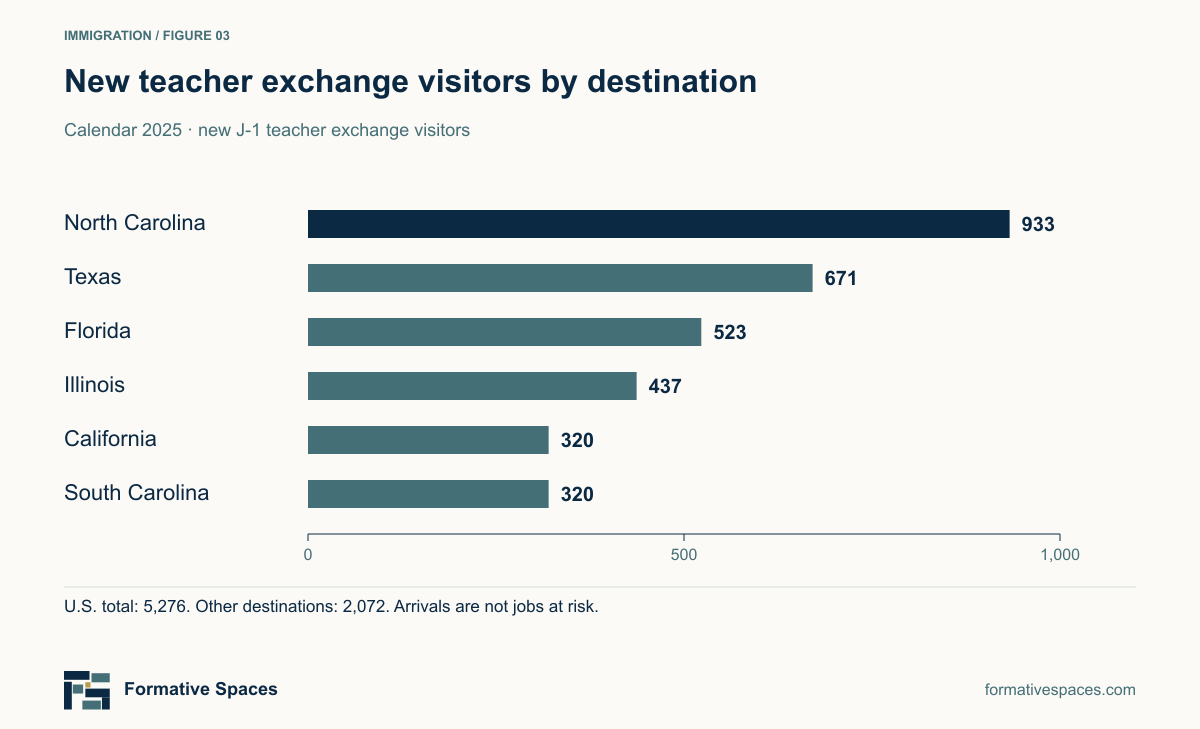
Follow changes affecting families with H-1B workers and H-4 dependents, with a focus on school continuity, dependent status and the move to college.
Track major agency, legislative and court decisions, and what they mean for enrollment, attendance, newcomer support and the daily work of schools.
Examine student visas, tuition and financial aid rules, and the consequences of policy changes for students planning their next step.
The new law, signed August 5, 2026, prohibits warrantless civil arrests on school grounds and mandates written emergency plans for all districts. California's AB 495 provides a parallel model.
A new Migration Policy Institute fact sheet estimates about 75,000 unauthorized immigrant students graduate from U.S. high schools each year. The graduates are concentrated in four states and face diminishing opportunities after graduation.
Enrollment declines in schools with high English learner populations translate to millions in lost funding and proposed teacher layoffs, as similar patterns emerge in Florida and California.
Processing times have surpassed seven months for most applicants. Educators in at least five school systems have been terminated or unable to start assignments after their work authorization expired before adjudication.
The proposed rule would remove the discretionary grace period that allows H-1B workers time to depart or change status after job loss, potentially forcing H-4 dependent children to withdraw from school mid-year with no buffer.
K-12 schools hosting F-1 students await court resolution as nationwide preliminary injunction delays new extension-of-stay process; statutory 12-month public high school cap remains in effect under existing framework.
Judge David W. Dugan ruled Illinois's in-state tuition and state financial aid for undocumented students violate federal preemption law, leaving a one-year gap before a legislative fix takes effect for the 2027-28 academic year.
The Eastern District of Virginia dismissed a DOJ challenge to Virginia's 2020 tuition equity law, ruling that its eligibility criteria are not residence-based. The decision conflicts with recent rulings against similar laws in Texas and Illinois.
The bill would require valid government-issued photo identification from adults registering children, a requirement that advocacy organizations say would effectively exclude undocumented families and likely invite court challenges under Plyler v. Doe.
The House passed a narrowed version requiring schools to report aggregate counts by documentation status, but the Senate never brought the bill to a concurrence vote. The 114th General Assembly adjourned sine die on April 23, 2026, ending the legislation for the session.
Effective August 15, 2025, USCIS will use only Final Action Dates for CSPA age calculations, reversing a 2023 policy that had lowered age-out risk for children of H-1B workers.
The June 25 ruling lets TPS protections end for about 350,000 Haitian and 6,000 Syrian nationals. Florida districts with large Haitian populations report lost staff and enrollment declines, while research ties enforcement to absenteeism.
The district eliminated 10 jobs at its Newcomer Academy after new multilingual learner enrollments fell from about 600 to fewer than 150 in a five-month period, while overall multilingual population stayed flat.
The proposal would eliminate a staffing pathway for hard-to-fill roles in bilingual, special education, math and science. The Texas Legislature convenes in January 2027.
A nationally representative survey of 753 educators finds student absences tied to enforcement fears nearly doubled since fall 2025, following DHS rescission of school protections.
A new DHS rule lets immigration officers consider SNAP and Medicaid use when evaluating applications, raising warnings from education groups that direct certification and CEP eligibility will decline.