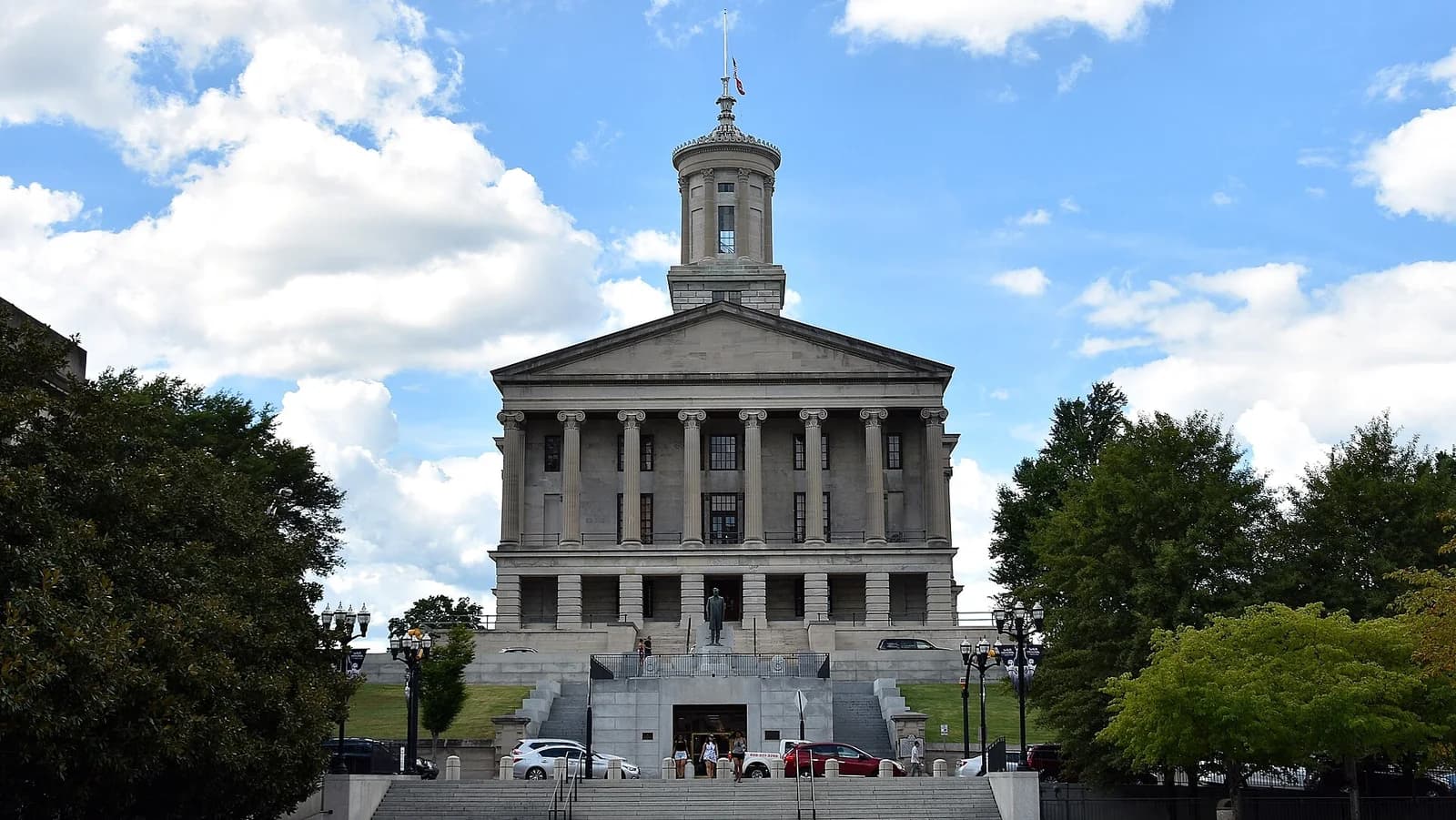
The Tennessee House passed SB 836 on March 16, 2026, by a 70-25 vote. The bill, originally filed as HB 793 by House Majority Leader William Lamberth on February 4, 2025, would have required all public school districts and charter schools in Tennessee to collect documentation from students proving U.S. citizenship, pending citizenship, legal immigration or visa status, or pending immigration proceedings. The House version, adopted as Amendment #2, stripped earlier provisions that would have allowed schools to deny enrollment or charge tuition to students who could not produce such documentation. The Senate, which passed a more expansive version on April 10, 2025, by a 19-13 vote, never concurred with the House amendments. On April 23, 2026, the 114th General Assembly adjourned sine die, killing the bill for the session [1][2][8][9][10].
From enrollment denial to data collection
The original Senate version of SB 836, passed on April 10, 2025, would have authorized districts to require documentation before enrollment and to refuse enrollment to students who could not provide it, or to condition enrollment on tuition payment. That version paralleled a Texas statute that the U.S. Supreme Court struck down in Plyler v. Doe (1982) as a violation of the Equal Protection Clause [2][6]. The House amendment removed those provisions, leaving only a requirement that schools compile aggregate counts of students by documentation status and report them to the Tennessee Department of Education. The reports must not include personally identifiable information, and the amendment explicitly states that enrolling a student who failed to produce documentation does not constitute a sanctuary policy [1][2].
The House sponsors scaled back the bill after fiscal analysis warned that the more expansive version could jeopardize federal funding. The Tennessee General Assembly's fiscal note states that the legislation may jeopardize federal funding to the state and local governments, though the extent and timing cannot be determined with certainty [4]. The Tennessean reported the potential loss at approximately $1.1 billion in annual K-12 federal education funding [3]. House Majority Leader Lamberth indicated the information was needed to inform policy choices regarding the state's schools, but House Republicans declined to specify what the state would do with the information once collected [3].
Plyler v. Doe as legal backdrop
The Senate version of the bill was originally framed by sponsors as a direct challenge to Plyler v. Doe, the 1982 Supreme Court decision that struck down a Texas law denying enrollment to undocumented children. The Court applied a heightened standard of review and found that Texas's justifications, including deterring illegal immigration and preserving resources, did not meet the threshold of a substantial goal. The decision was 5-4, with Chief Justice Warren Burger dissenting, joined by Justices White, Rehnquist, and O'Connor [6][7]. Legal observers have noted that the narrow margin has prompted discussion about whether Plyler would withstand review by the current Court.
Tennessee Attorney General Jonathan Skrmetti indicated that the House version does not present the same direct test of Plyler as the Senate version, though he noted that the legislation would probably still draw litigation if it became law [3]. The House amendment stripped the provisions that most closely paralleled the struck-down Texas statute, leaving only a data-collection requirement. Had the Senate version become law, Tennessee would have authorized school districts to deny enrollment or charge tuition to undocumented students, provisions that directly tested Plyler. The House version would have required documentation collection and reporting without conditioning enrollment on it [1][2].
Why the bill stalled
After the House passed SB 836 as amended on March 16, 2026, the bill was placed on the Senate Message Calendar. On March 26, 2026, the Senate re-referred it to the Senate Calendar Committee [1][2]. Senate sponsor Bo Watson, who had passed the original bill through the Senate in April 2025, never brought the bill to a concurrence vote. The Nashville Banner reported that Watson rejected Lamberth's version, letting it wither in calendar limbo without taking a vote to reconcile the two chambers' versions [8]. The Tennessee Trucking Association reported that Watson concluded he lacked the votes for concurrence [11]. The 114th General Assembly adjourned sine die on April 23, 2026, pursuant to Senate Joint Resolution 1280, ending the legislation for the session [9][10]. EdTrust-Tennessee described the outcome as the second consecutive year that legislation to bar children from school based on immigration status had been stopped [9].
What the evidence says
The Supreme Court's reasoning in Plyler v. Doe remains the controlling precedent on the question of denying public education to undocumented children. The Court held that education plays a fundamental role in maintaining the fabric of society and that the costs of denying education to these children outweigh any savings. Under the Court's heightened standard of review, the state must show a substantial goal to justify the discrimination, a standard the Court found Texas failed to meet [6][7]. The dissent argued for deference to state judgment, and that argument continues to resonate in current legal and political debates.