AI in Schools / The Visual Edition / Story 08
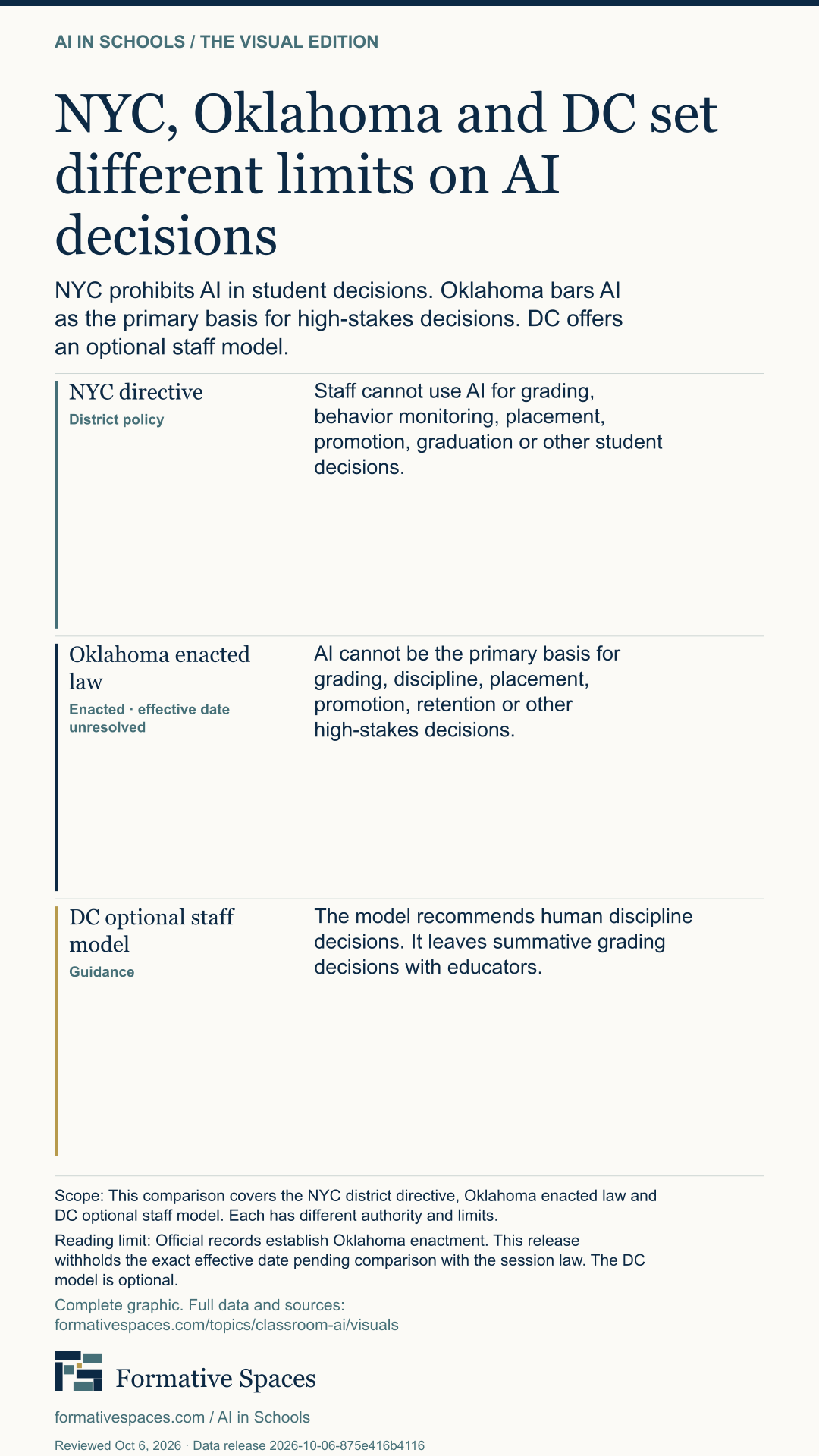
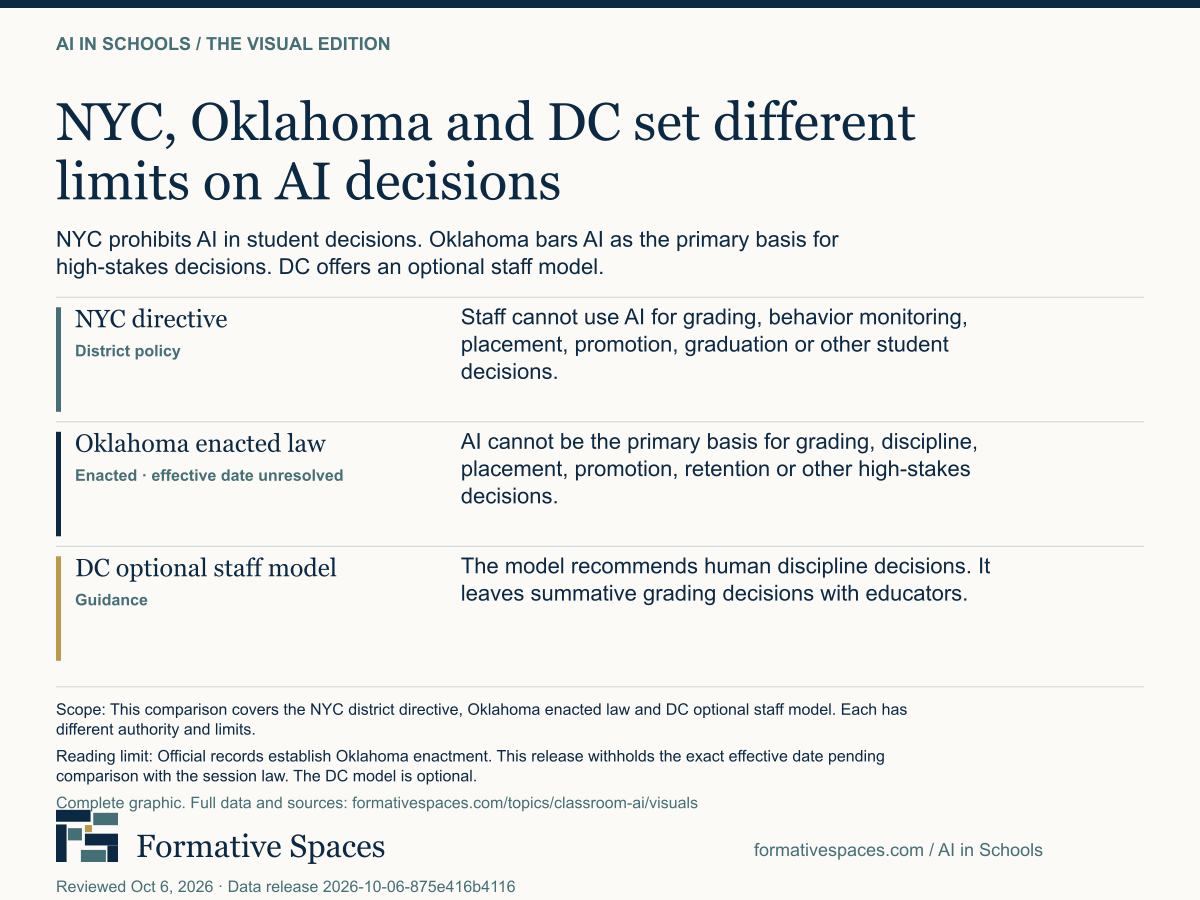
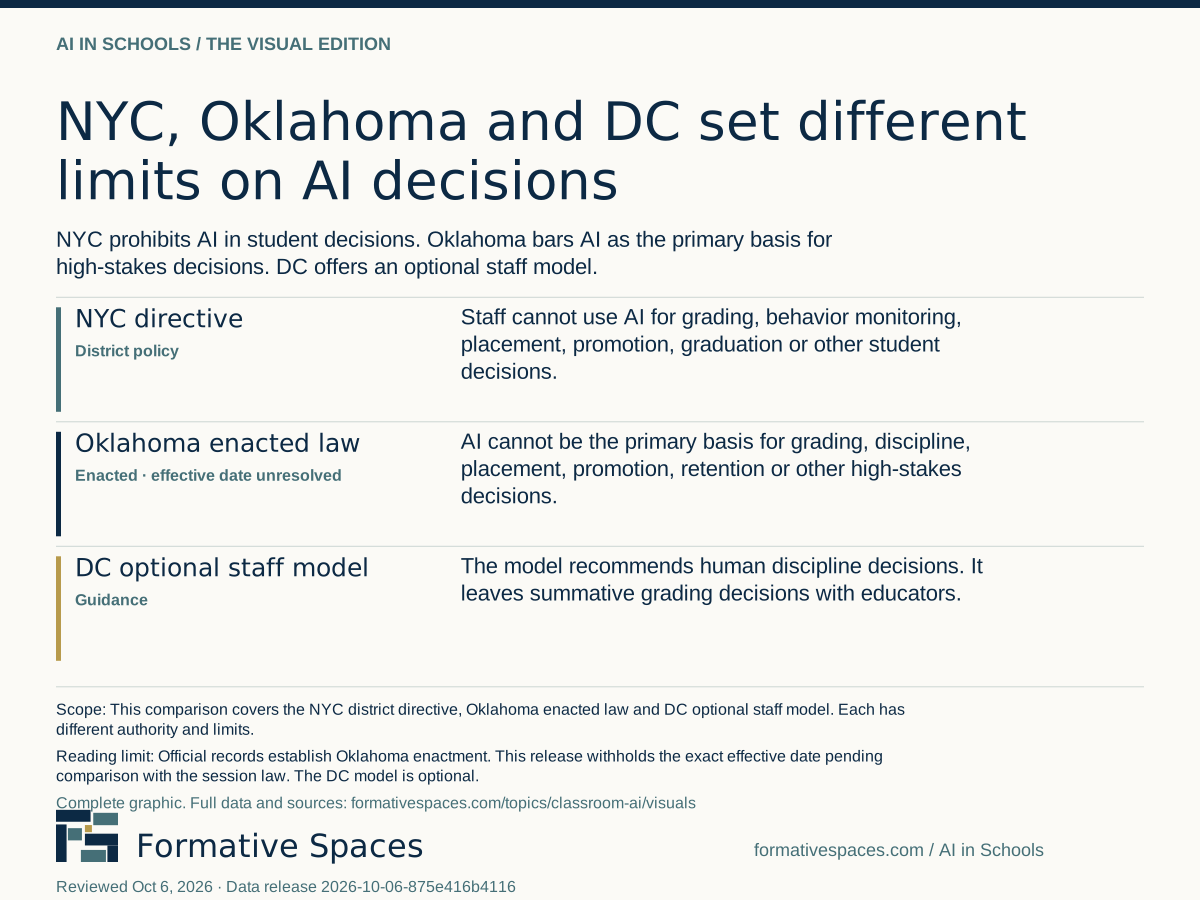
NYC, Oklahoma and DC set different limits on AI decisions
NYC prohibits AI in student decisions. Oklahoma bars AI as the primary basis for high-stakes decisions. DC offers an optional staff model.
Formative Spaces · Research reviewed October 6, 2026
Key findings
NYC prohibits AI for specified student decisions and other student decisions. Oklahoma prohibits AI as the primary basis for specified decisions with major consequences. These restrictions differ in scope.
DC recommends human judgment in discipline and summative grading. Local education agencies may adopt or adapt the model. The file does not establish adoption by every DC school.
Animated chart
Eight-second animation
The animation shows the same data as the chart. Use the controls to play, pause or expand the video.
Download and share
Each download includes the Formative Spaces name, brandmark and source context. Share the complete graphic. Include a link to this story. Site terms apply. Original policy sources retain their own rights.
Still graphics
Landscape PNG 1200 × 900Square PNG 1080 × 1080Vertical PNG 1080 × 1920Scalable SVG Full graphic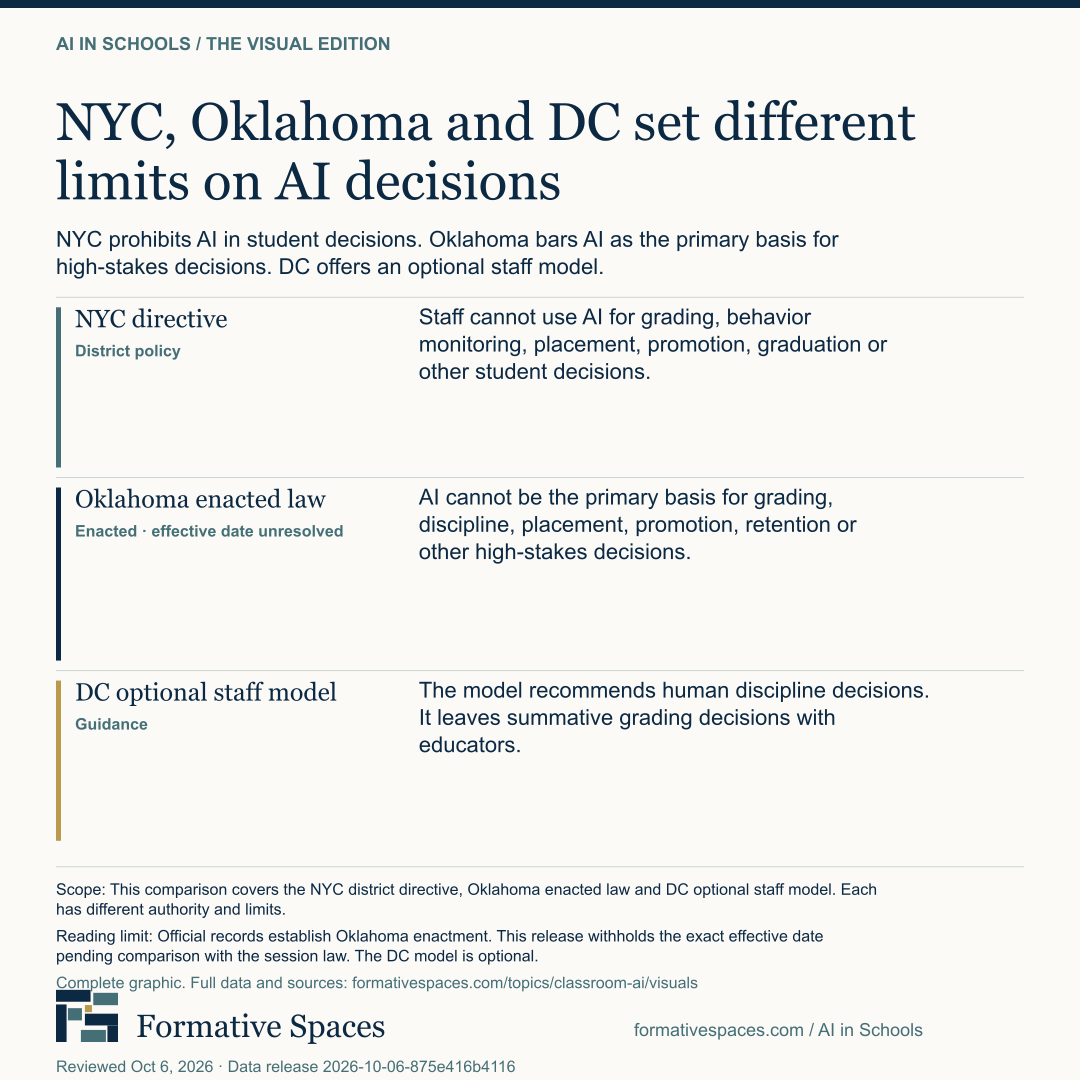
Animations
Landscape MP4 8 seconds · silentVertical MP4 8 seconds · silentAnimated SVG Reduced-motion aware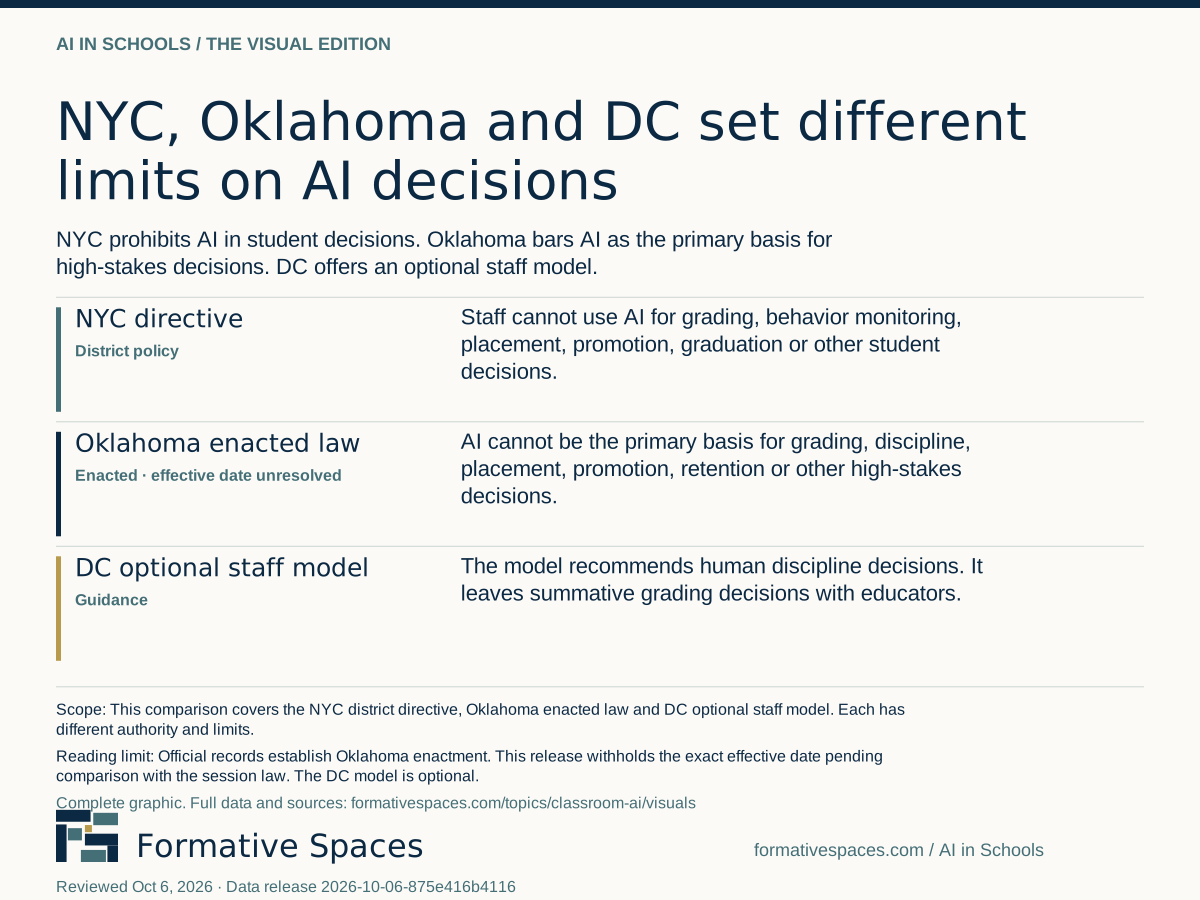
PNG and MP4 files can be uploaded to social platforms. Available sharing destinations depend on your device and the platform.
Chart data and sources
selected instruments. This comparison covers the NYC district directive, Oklahoma enacted law and DC optional staff model. Each has different authority and limits.
| Document | Limits on decisions | Evidence |
|---|---|---|
| NYC directiveDistrict policy | Staff cannot use AI for grading, behavior monitoring, placement, promotion, graduation or other student decisions. | New York City Public Schools: Student-facing AI and screen-time policyProvision references
|
| Oklahoma enacted lawEnacted · effective date unresolved | AI cannot be the primary basis for grading, discipline, placement, promotion, retention or other high-stakes decisions. | Oklahoma: Responsible Technology in Schools ActProvision references
|
| DC optional staff modelGuidance | The model recommends human discipline decisions. It leaves summative grading decisions with educators. | District of Columbia: LEA AI model policy for staff useProvision references
|
Official records establish Oklahoma enactment. This release withholds the exact effective date pending comparison with the session law. The DC model is optional.
Sources & Notes
- Guidance on Artificial Intelligence and Screen Time
New York City Public Schools · Source checked October 6, 2026
- AI Use by Educators and School Staff
- Responsible Technology in Schools Act — official document
Oklahoma Legislature · Source checked October 6, 2026
- §1(E)(3)
- Bill Information
Oklahoma Legislature · Source checked October 6, 2026
Official SB 1734 bill history
Reviewed record and version → - LEA AI model policy for staff use — official document
Office of the State Superintendent of Education · Source checked October 6, 2026
- PDF page 10 — Student discipline
- PDF page 14 — Reviewing and grading student work
Release and evidence identity
Research release 2026-10-06-875e416b4116. Headlines and comparisons use this reviewed release. A changed record requires a new editorial review.
Source projection SHA-256: 9cd6a4996022129f1a1a1060c399a65f12c8f18bc7774fea67463c4d0dd981eb
- nyc-ai-2026-27 / q13:
8065ca4c14e4a4c2006240db676bac63657eb202ff7ea09c1c1705a2dacb00f2 - oklahoma-responsible-technology / ok_sb1734_enrolled:
a2a33057c3fbeaf1f165a6a28500b0438382aa95a54eca6d5cdf638b589baefc - oklahoma-responsible-technology / ok_sb1734:
e28a8f07aaeffb74b21a37e8f0581072943b6b4949110963dc41461094d395b3 - dc-staff-ai-model / dc_staff_model:
853fdcf9bcc04b2ac6cadbd3e4373dfff8dbc33c1a58cfac6a519632504165c6
Public policy data for this release (JSON) · Collection and coverage notes
Citation
Formative Spaces, “NYC, Oklahoma and DC set different limits on AI decisions,” AI in Schools: The Visual Edition, research release 2026-10-06-875e416b4116, reviewed October 6, 2026. https://www.formativespaces.com/topics/classroom-ai/visuals/human-judgment-has-boundaries