Visual story 01 · Counts
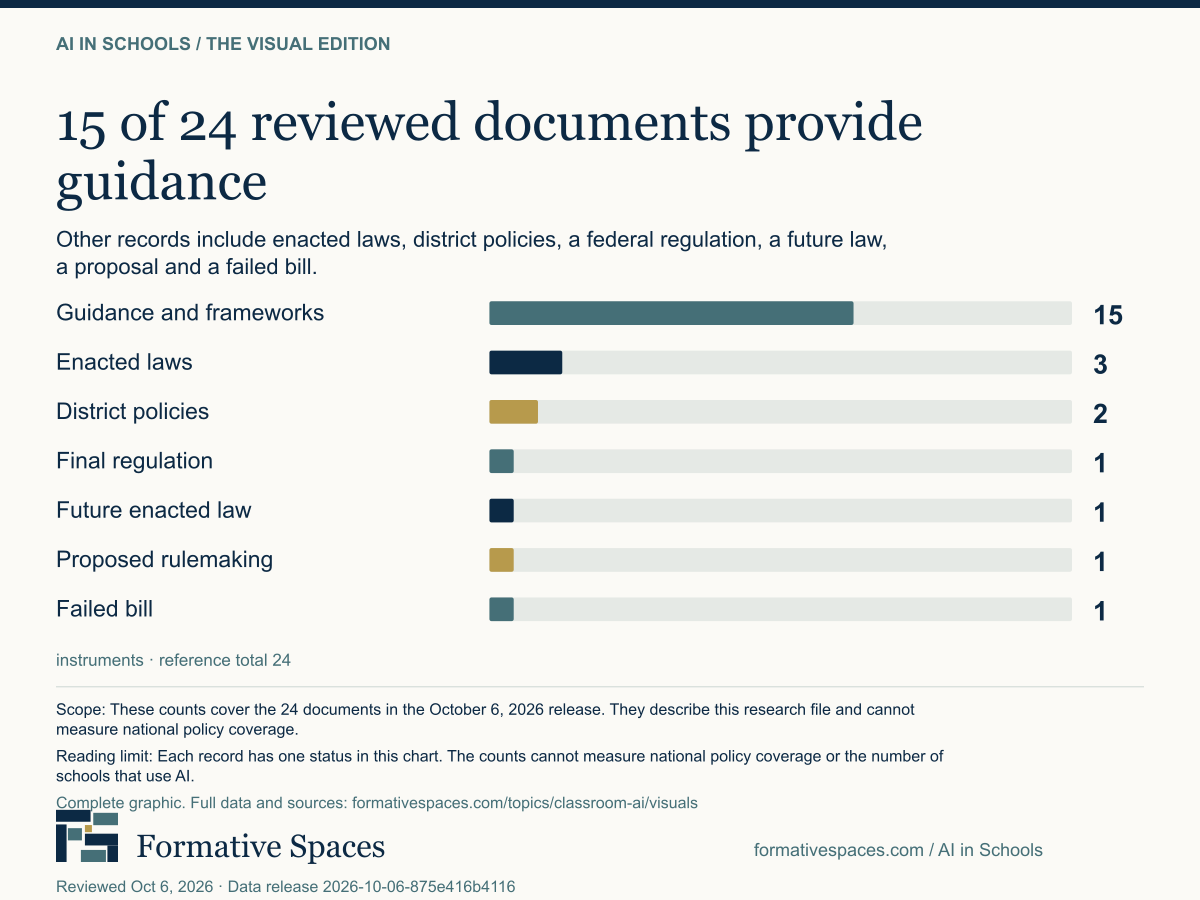
15 of 24 reviewed documents provide guidance
Other records include enacted laws, district policies, a federal regulation, a future law, a proposal and a failed bill.
Read & shareAI in Schools / The Visual Edition
Compare student AI use, family notice and legal deadlines in 16 charts. Each chart links to the official sources.
Issue 01 · October 6, 2026
24 policy documents · 72 reviewed provisions
Open the research file →
The 2026–27 directive restricts student-facing generative AI in grades 2K–8. The directive limits high school use to approved, vetted programs.
Read the grade rules and exceptions →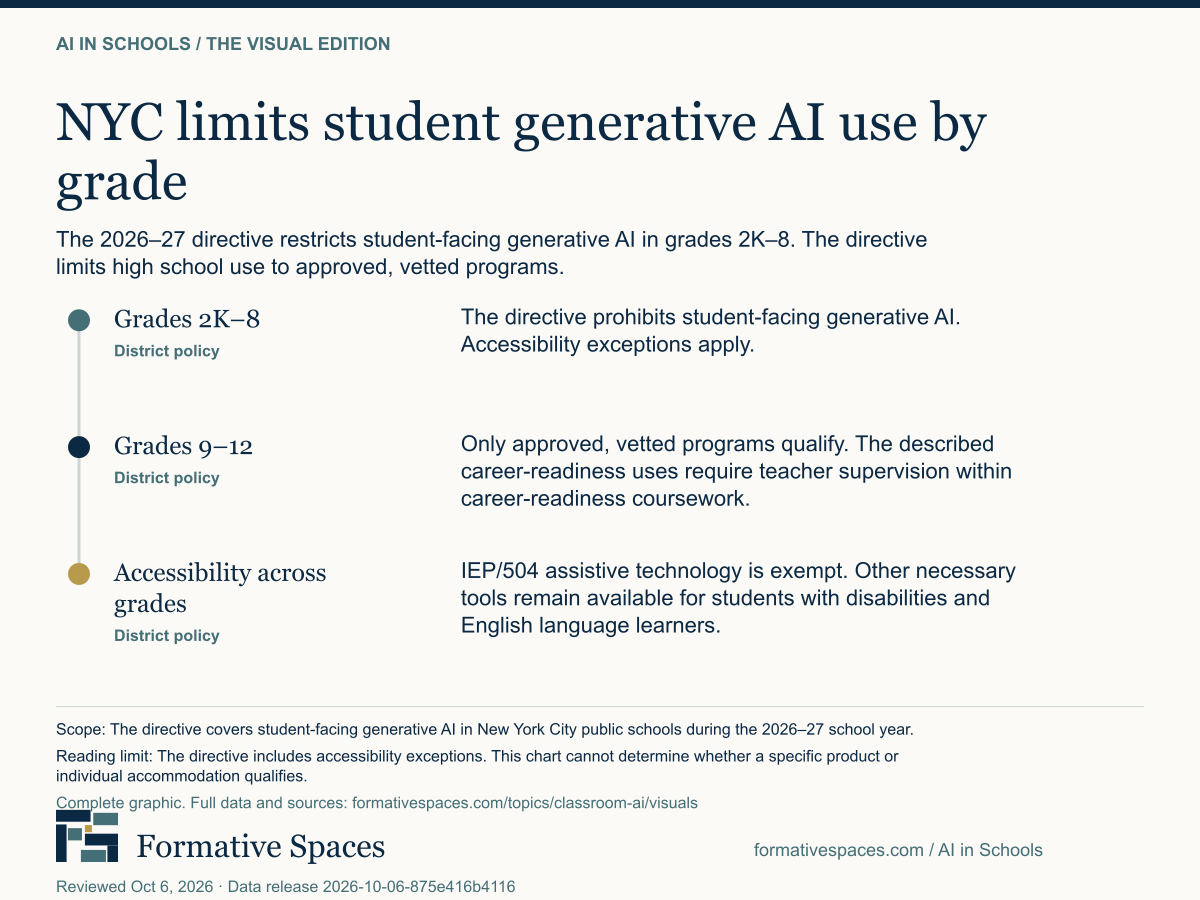
Chapter 01
The file contains laws, guidance and proposals. Research coverage is partial.
Visual story 01 · Counts
Other records include enacted laws, district policies, a federal regulation, a future law, a proposal and a failed bill.
Read & shareVisual story 02 · Counts
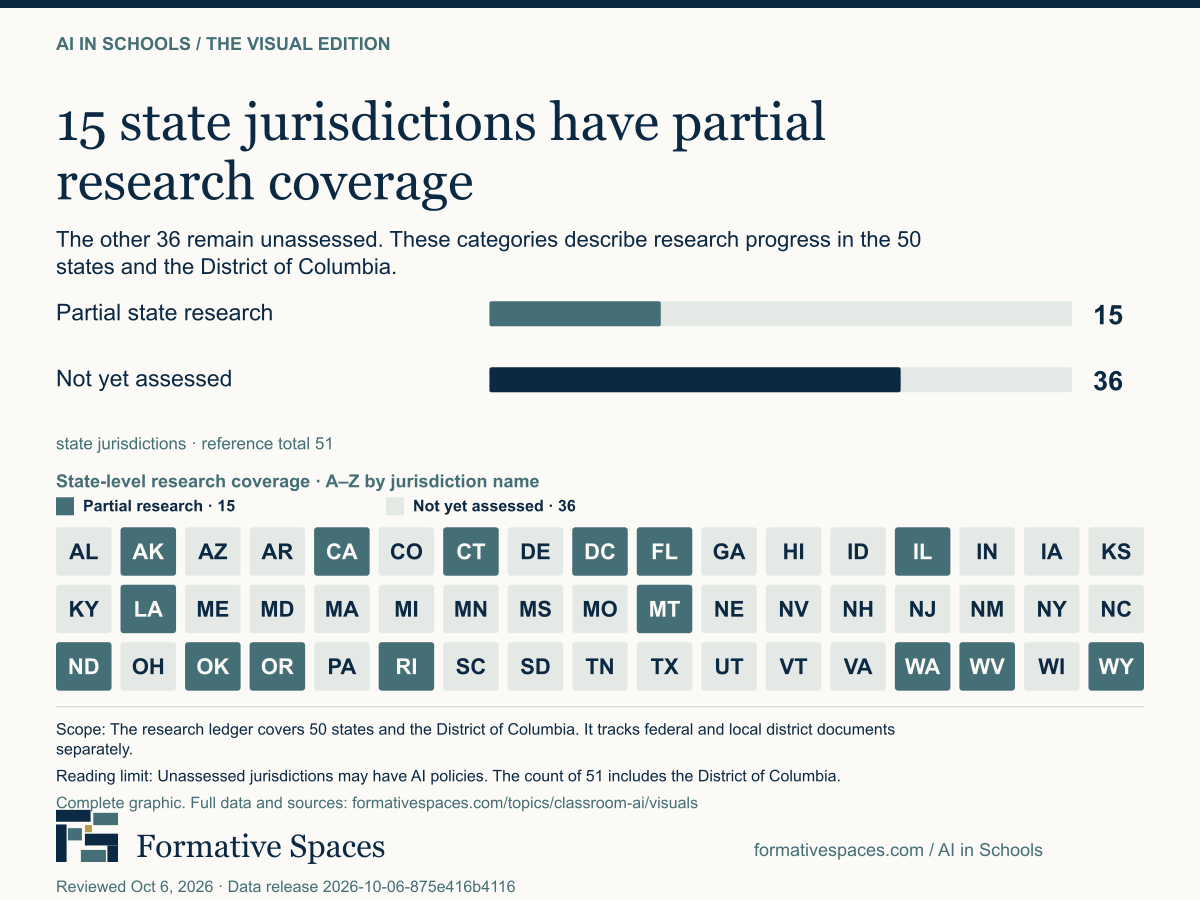
The other 36 remain unassessed. These categories describe research progress in the 50 states and the District of Columbia.
Read & shareVisual story 03 · Counts
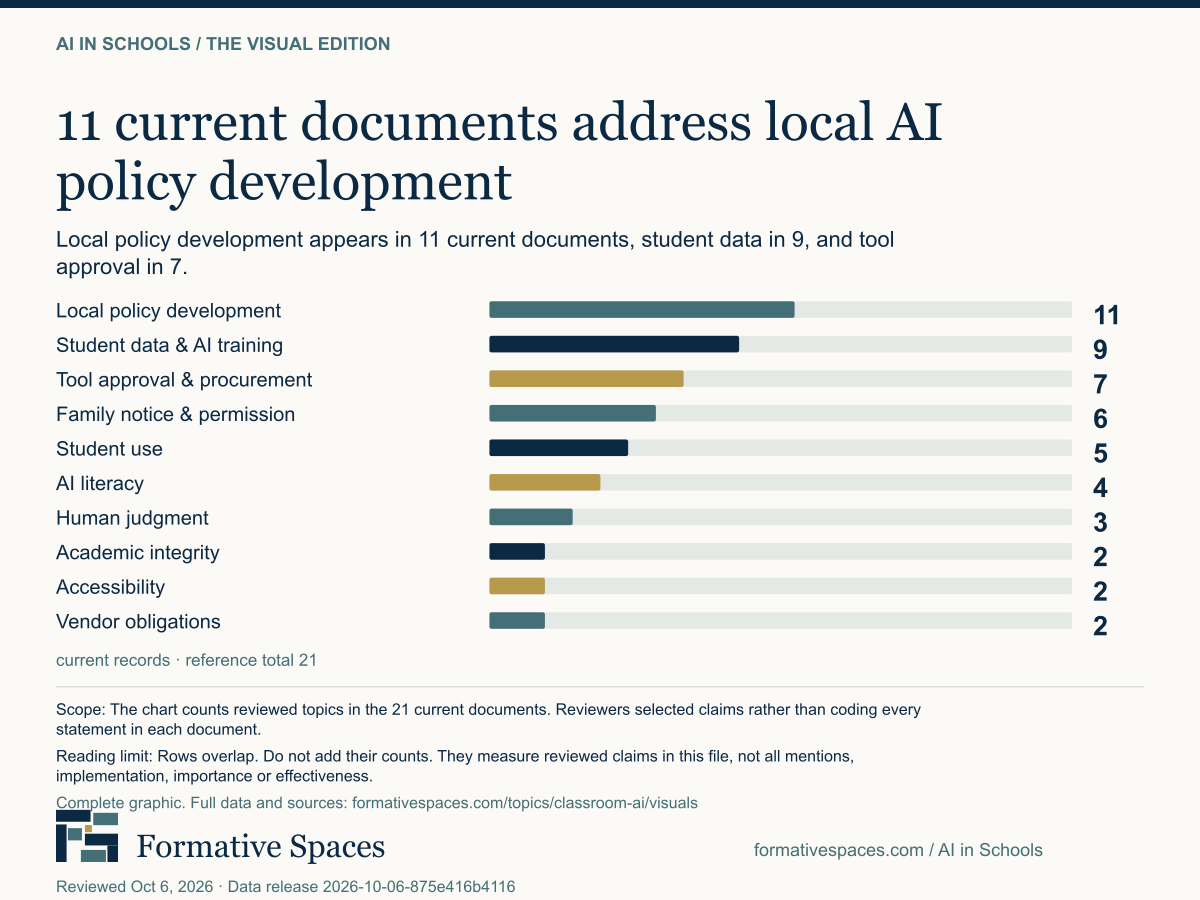
Local policy development appears in 11 current documents, student data in 9, and tool approval in 7.
Read & shareChapter 02
Compare rules for student use and duties to teach AI literacy.
Visual story 04 · Policy comparison
The 2026–27 directive restricts student-facing generative AI in grades 2K–8. The directive limits high school use to approved, vetted programs.
Read & shareVisual story 05 · Counts
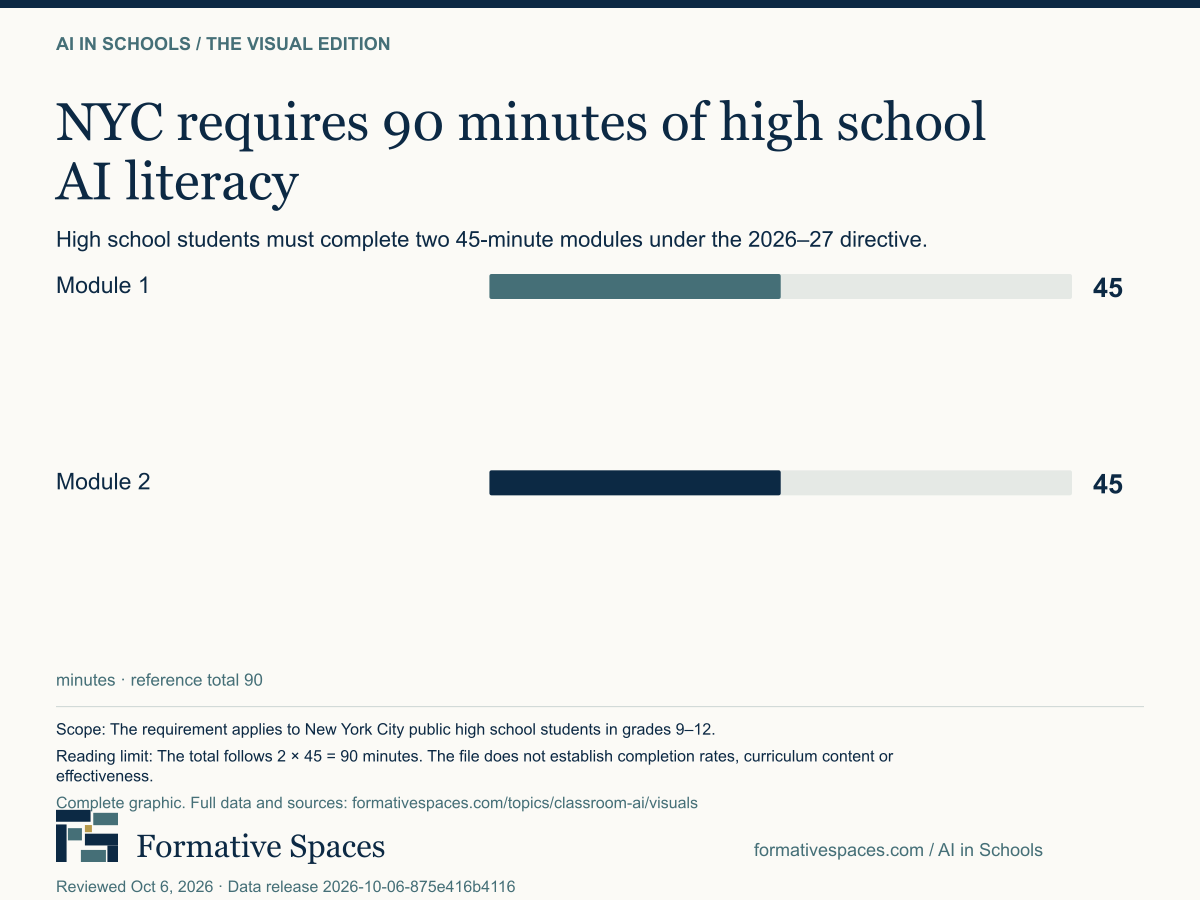
High school students must complete two 45-minute modules under the 2026–27 directive.
Read & shareVisual story 06 · Policy comparison
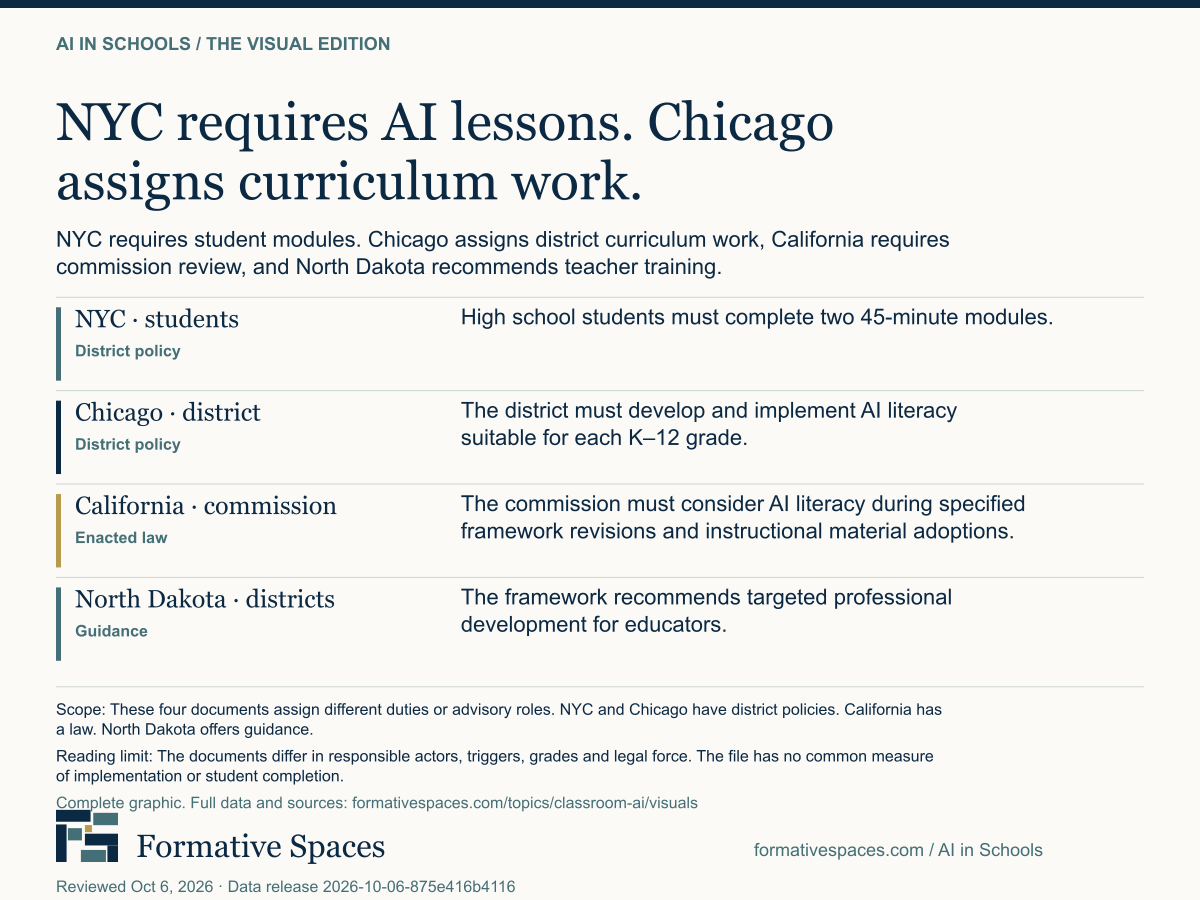
NYC requires student modules. Chicago assigns district curriculum work, California requires commission review, and North Dakota recommends teacher training.
Read & shareVisual story 07 · Policy comparison
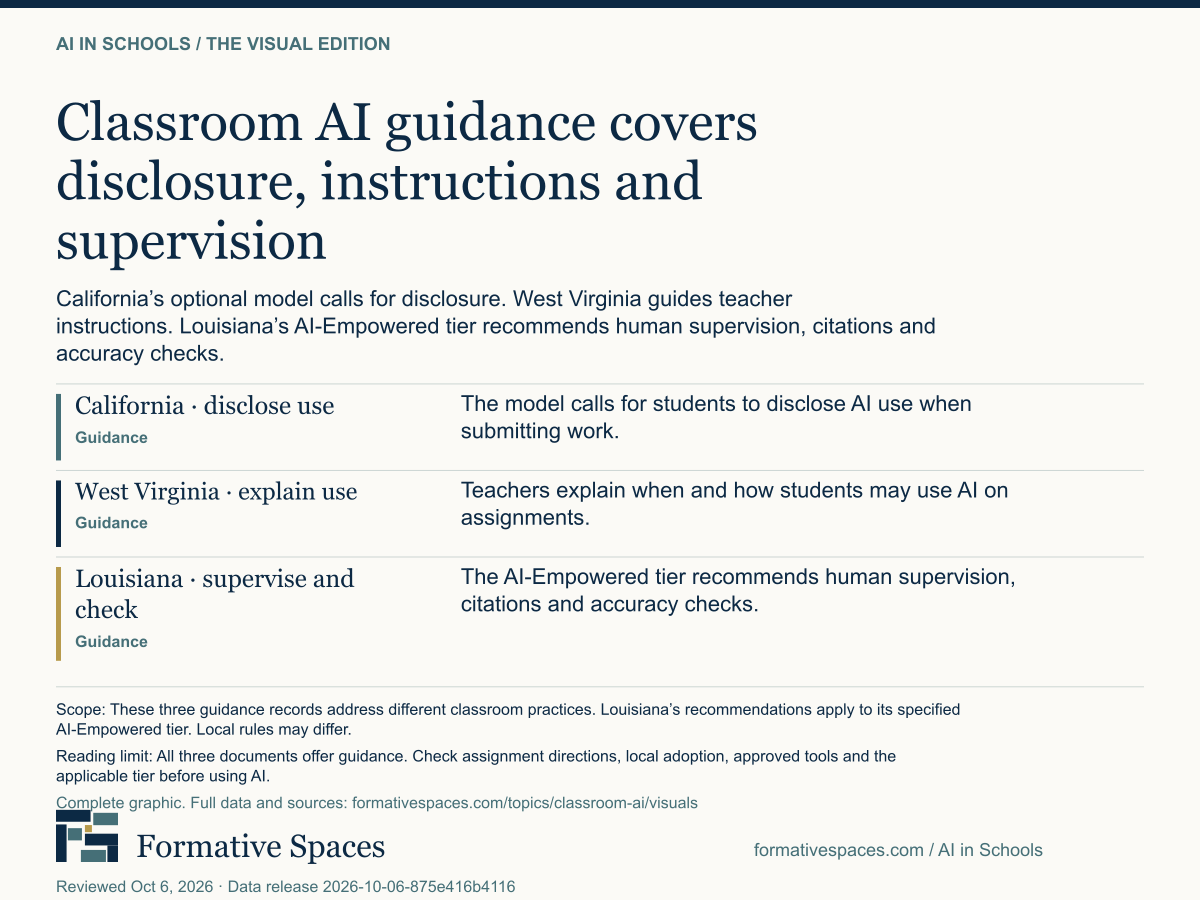
California’s optional model calls for disclosure. West Virginia guides teacher instructions. Louisiana’s AI-Empowered tier recommends human supervision, citations and accuracy checks.
Read & shareChapter 03
Compare limits on AI decisions, family notice and tool approval.
Visual story 08 · Policy comparison
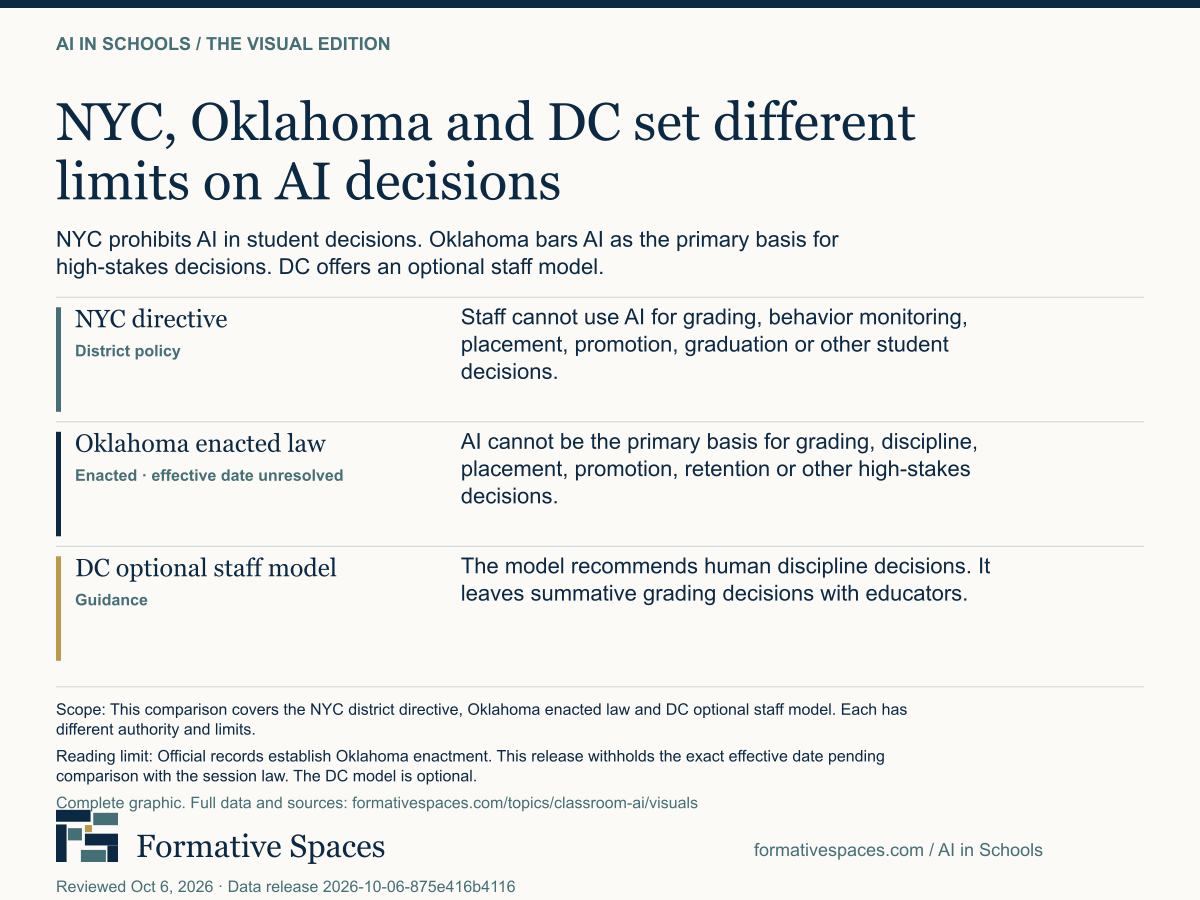
NYC prohibits AI in student decisions. Oklahoma bars AI as the primary basis for high-stakes decisions. DC offers an optional staff model.
Read & shareVisual story 09 · Policy comparison
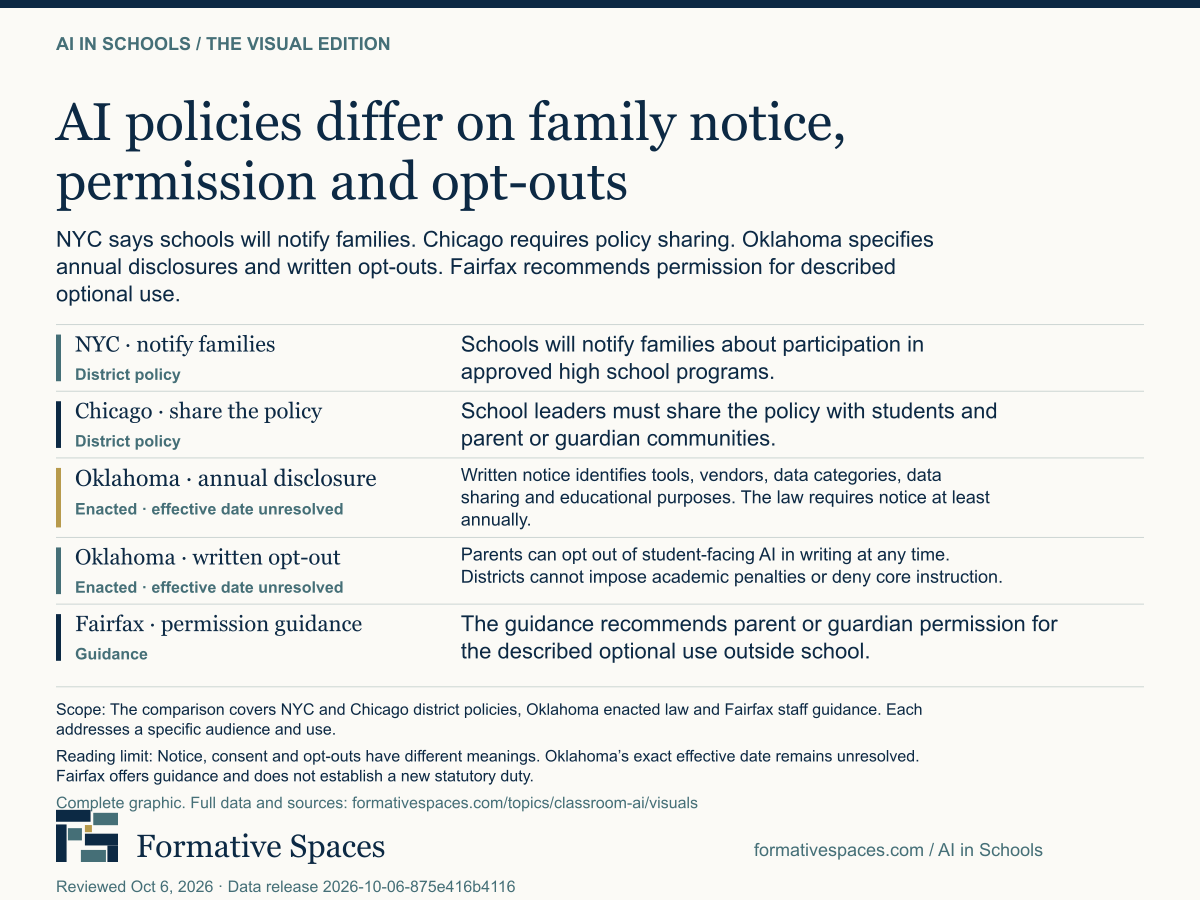
NYC says schools will notify families. Chicago requires policy sharing. Oklahoma specifies annual disclosures and written opt-outs. Fairfax recommends permission for described optional use.
Read & shareVisual story 10 · Policy comparison
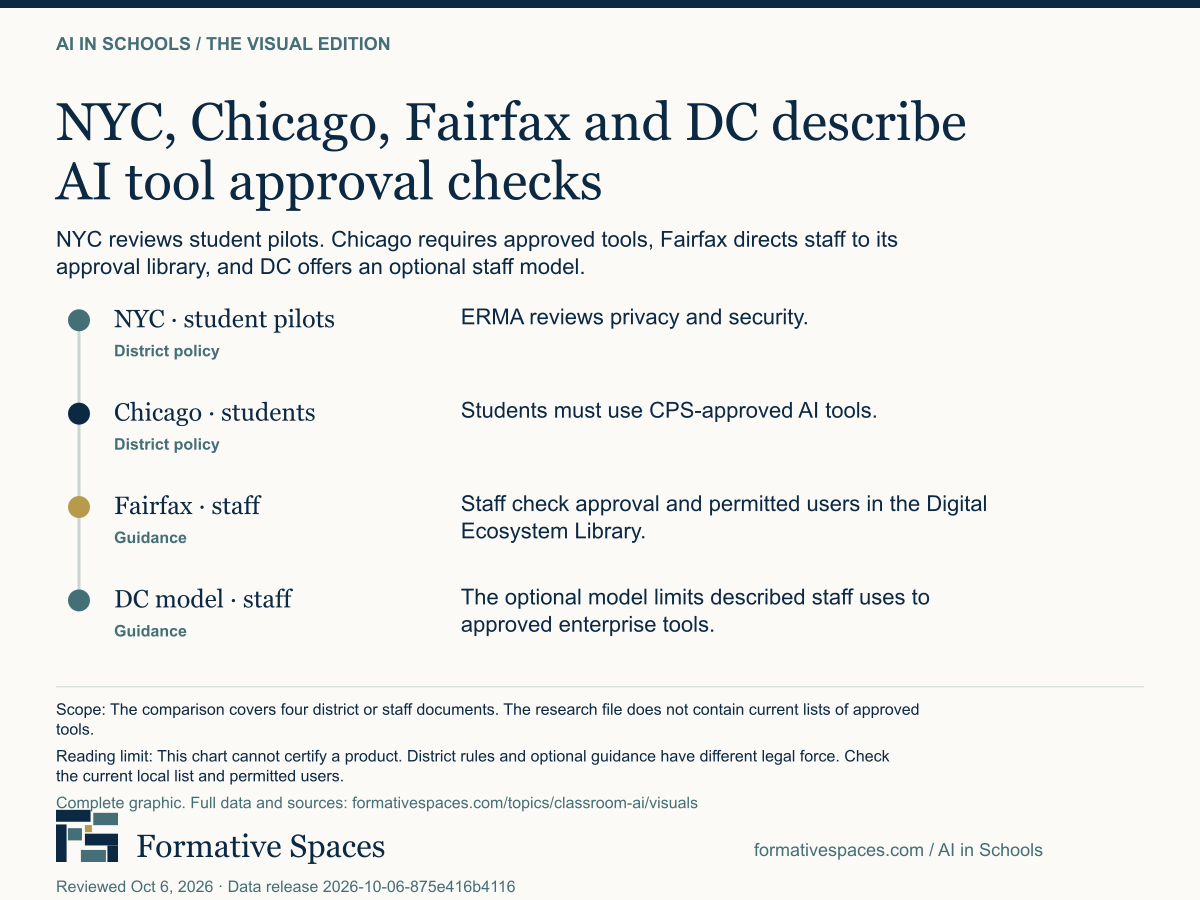
NYC reviews student pilots. Chicago requires approved tools, Fairfax directs staff to its approval library, and DC offers an optional staff model.
Read & shareChapter 04
Check each law’s status, scope and deadlines.
Visual story 11 · Dates
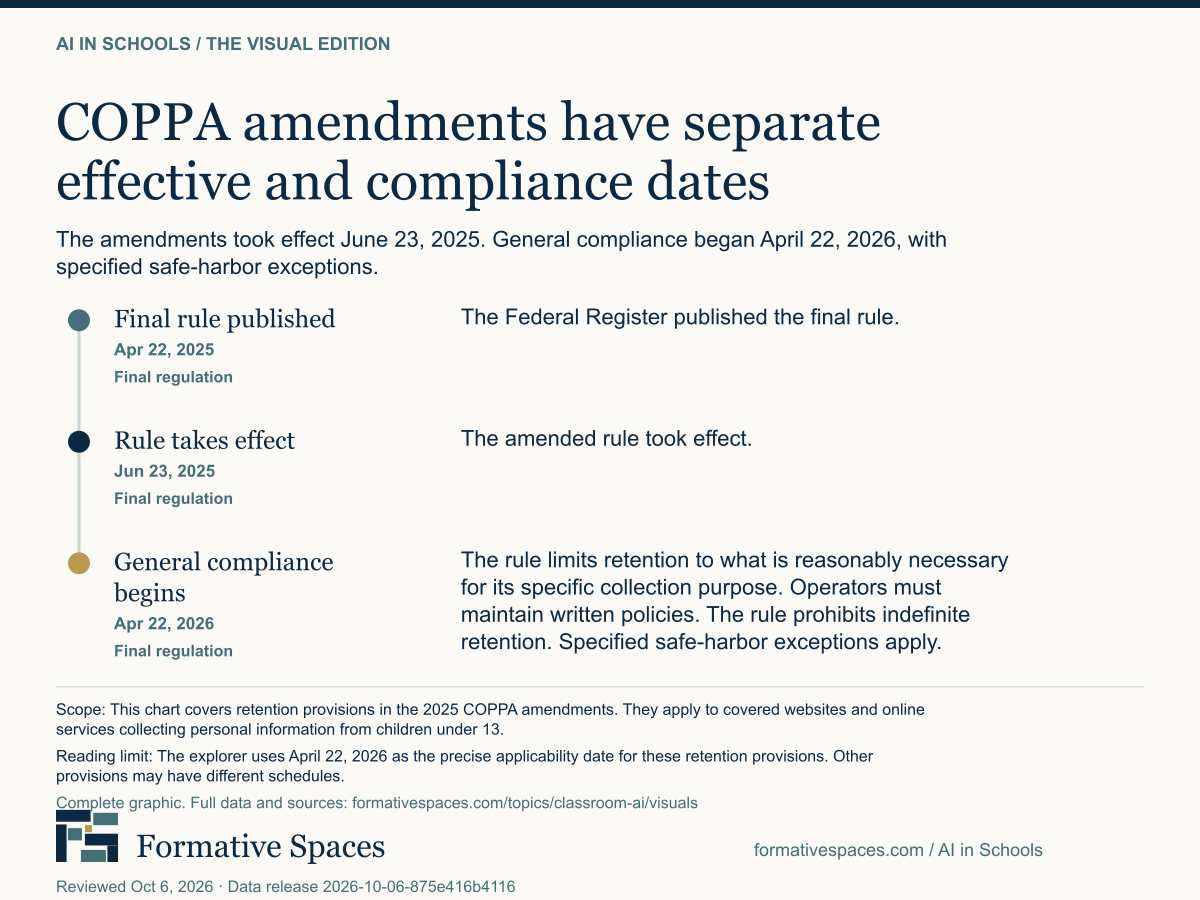
The amendments took effect June 23, 2025. General compliance began April 22, 2026, with specified safe-harbor exceptions.
Read & shareVisual story 12 · Policy comparison
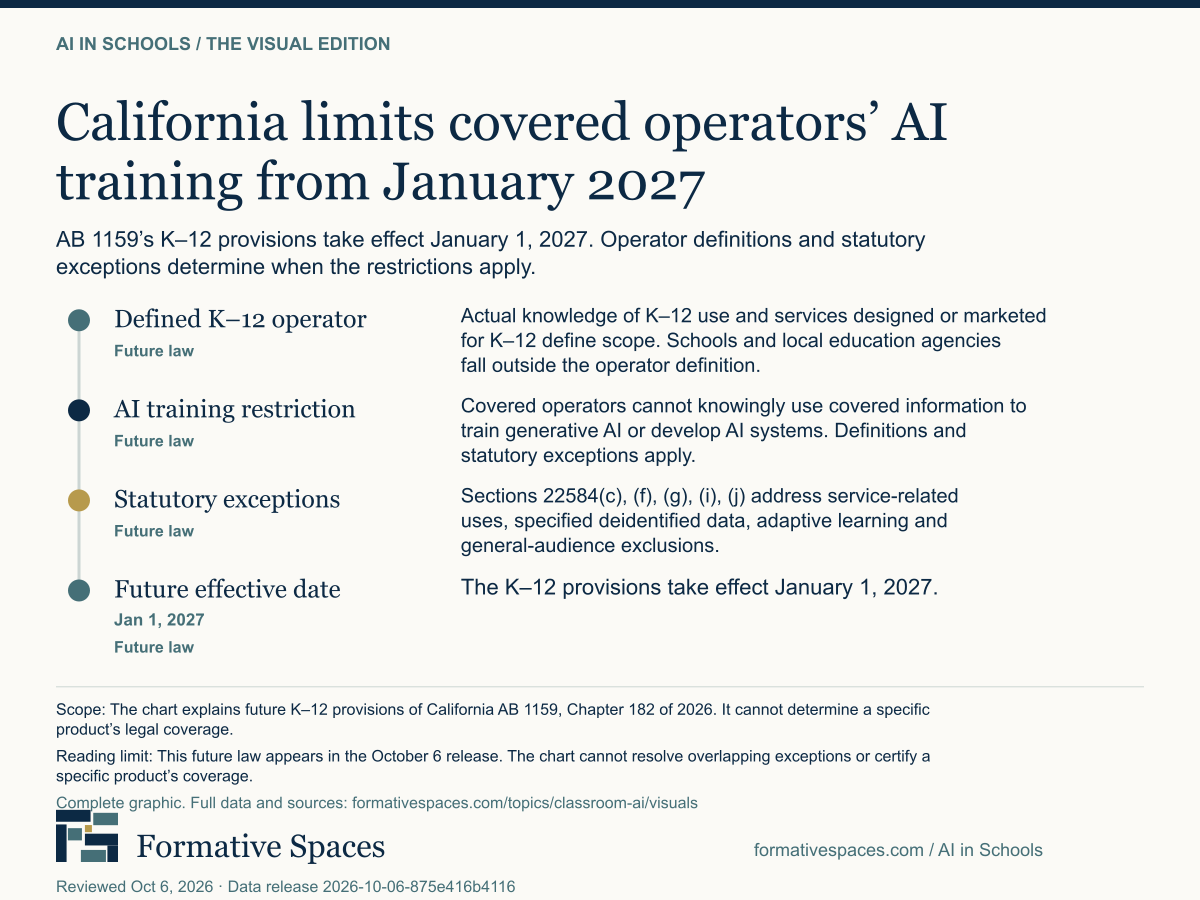
AB 1159’s K–12 provisions take effect January 1, 2027. Operator definitions and statutory exceptions determine when the restrictions apply.
Read & shareVisual story 13 · Policy comparison
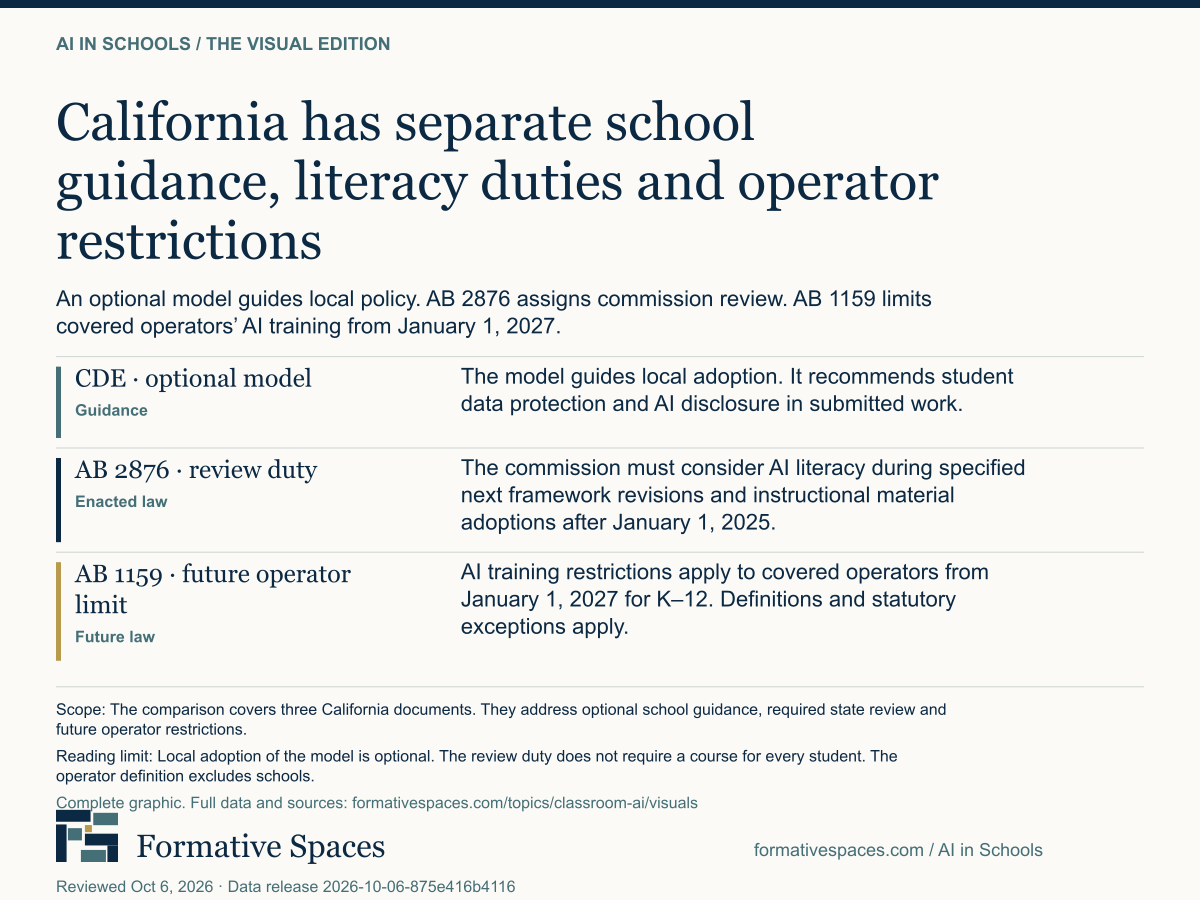
An optional model guides local policy. AB 2876 assigns commission review. AB 1159 limits covered operators’ AI training from January 1, 2027.
Read & shareVisual story 14 · Policy comparison
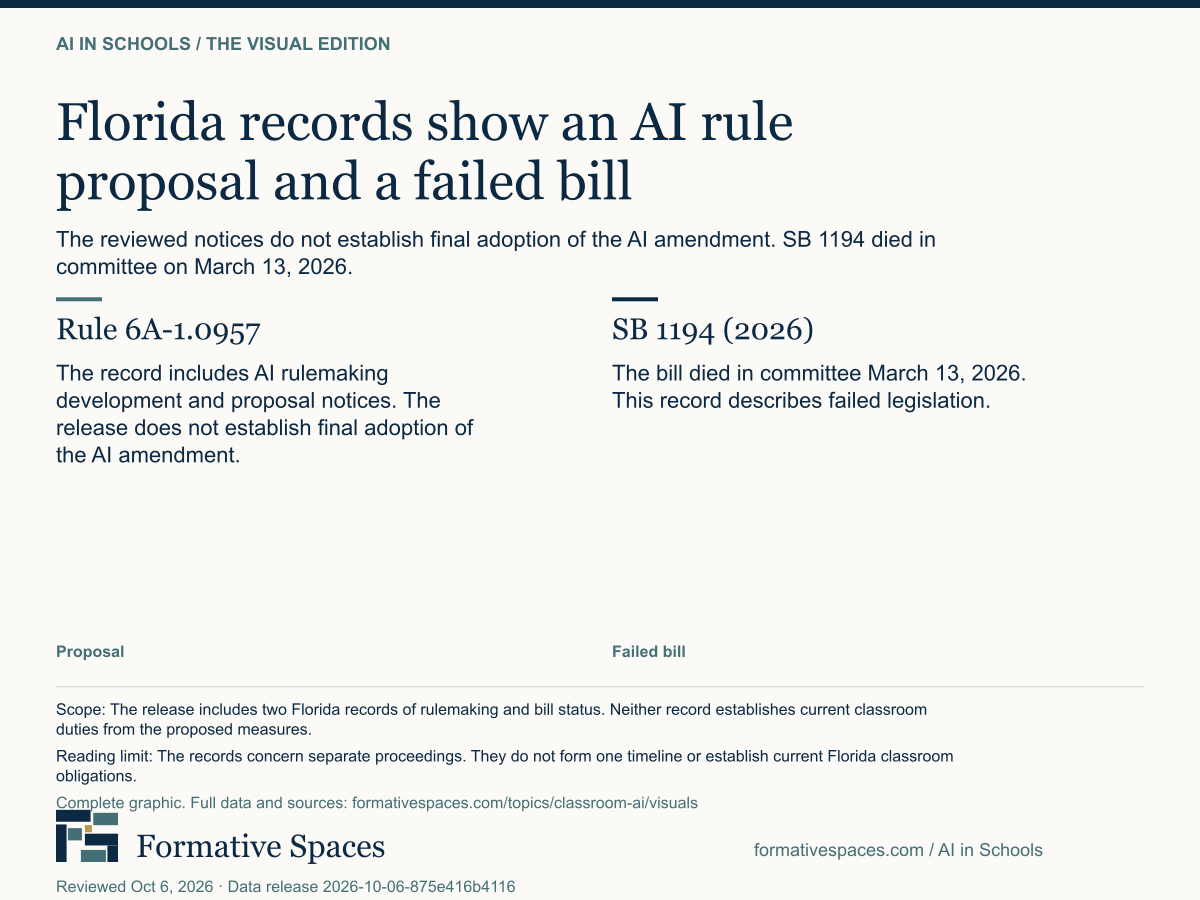
The reviewed notices do not establish final adoption of the AI amendment. SB 1194 died in committee on March 13, 2026.
Read & shareVisual story 15 · Policy comparison
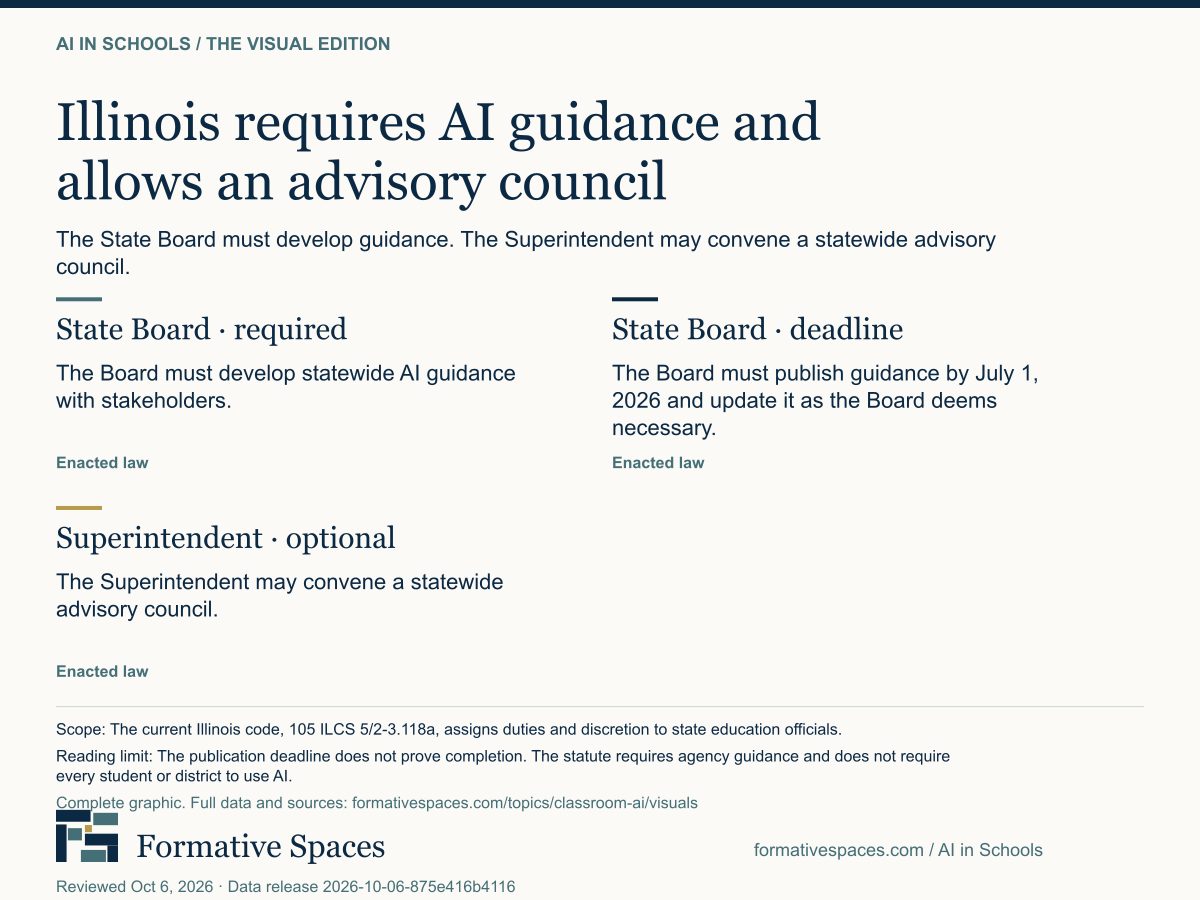
The State Board must develop guidance. The Superintendent may convene a statewide advisory council.
Read & shareVisual story 16 · Dates
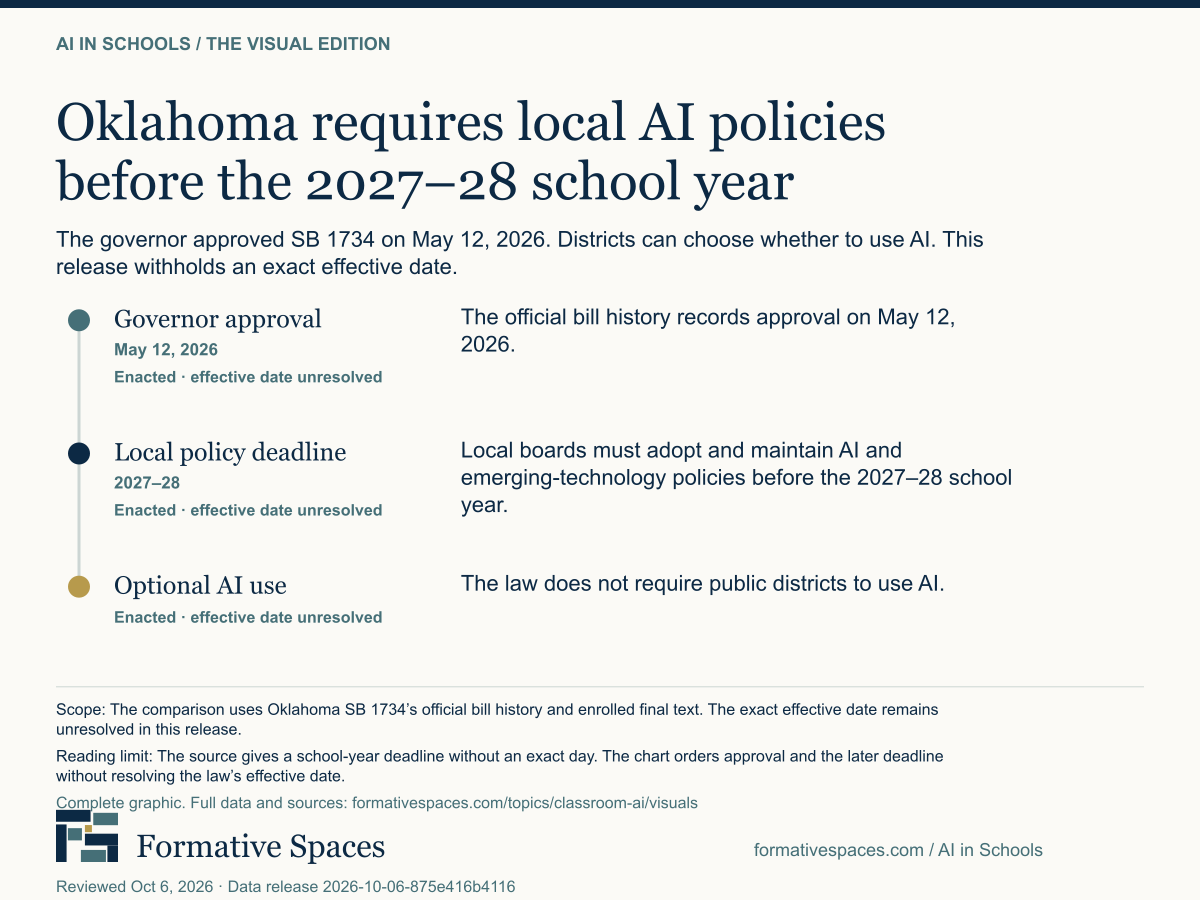
The governor approved SB 1734 on May 12, 2026. Districts can choose whether to use AI. This release withholds an exact effective date.
Read & share